Managing Anxiety Naturally: Evidence-Based Ways to Feel Calmer
Anxiety is a normal response to stress, but when it becomes frequent or overwhelming, it can affect your work, relationships, sleep, and overall quality of life. While professional treatment is important for moderate to severe anxiety, many natural strategies can help reduce symptoms and improve emotional well-being.
What Is Anxiety?
Anxiety is your body’s natural “fight-or-flight” response to perceived danger. Common symptoms include:
- Excessive worrying
- Restlessness or feeling on edge
- Rapid heartbeat
- Muscle tension
- Difficulty concentrating
- Trouble sleeping
- Sweating or trembling
Occasional anxiety is normal, but persistent anxiety may require professional evaluation.
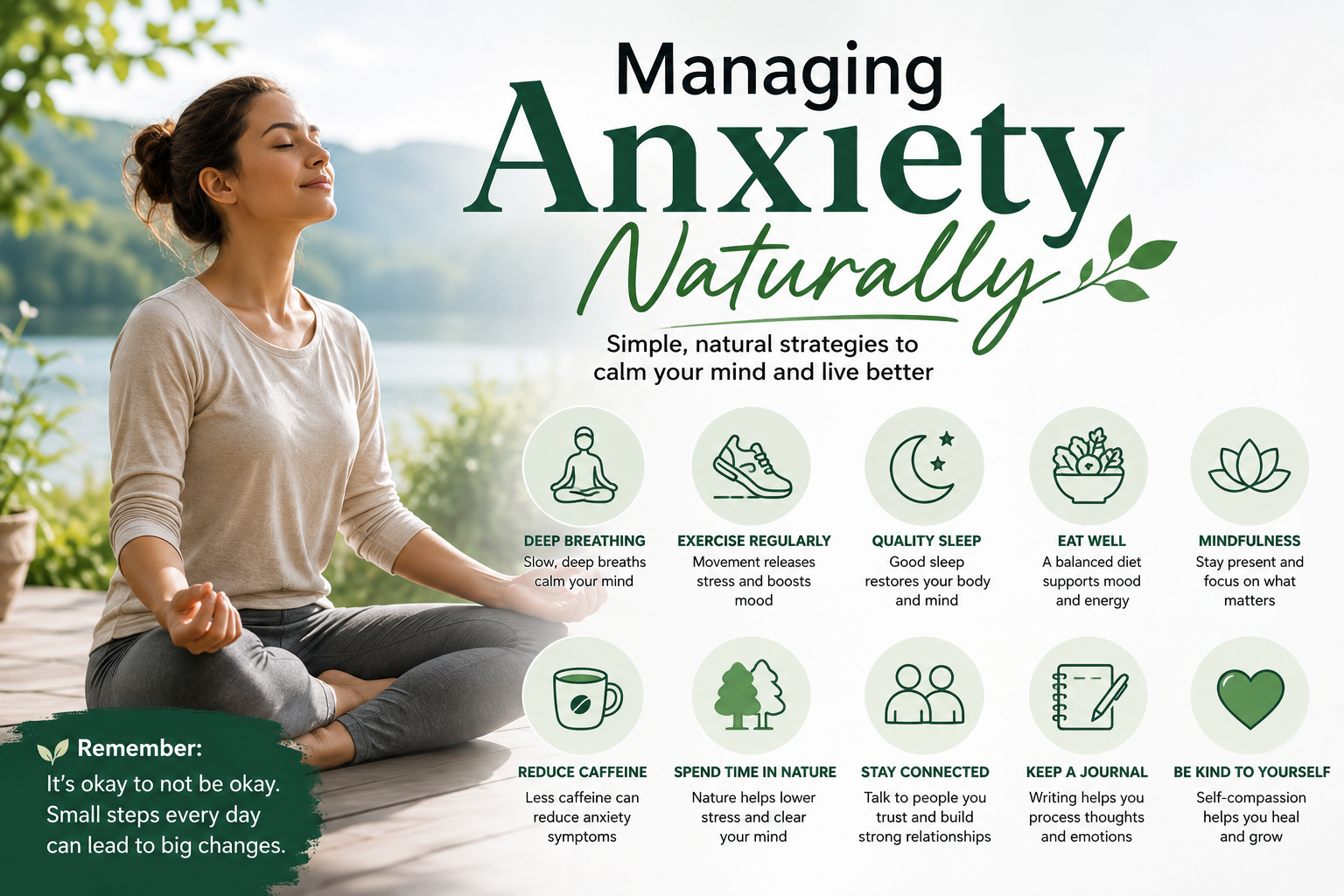
1. Practice Deep Breathing
Deep breathing activates the body’s relaxation response.
Simple breathing exercise:
- Inhale through your nose for 4 seconds.
- Hold your breath for 4 seconds.
- Exhale slowly through your mouth for 6 seconds.
- Repeat for 5–10 minutes.
This can help lower heart rate and reduce feelings of panic.
2. Exercise Regularly
Physical activity releases endorphins, improves mood, and lowers stress hormones.
Aim for:
- 150 minutes of moderate exercise per week.
- Activities like walking, cycling, swimming, yoga, or strength training.
Even a 20-minute walk can reduce anxiety.
3. Prioritize Quality Sleep
Poor sleep and anxiety often reinforce each other.
Tips for better sleep:
- Maintain a consistent bedtime.
- Avoid caffeine late in the day.
- Limit screen time before bed.
- Keep your bedroom cool, dark, and quiet.
Adults generally benefit from 7–9 hours of sleep per night.
4. Eat a Balanced Diet
Nutrition can influence mood and energy levels.
Include:
- Fruits and vegetables
- Whole grains
- Lean proteins
- Healthy fats (nuts, seeds, olive oil, fatty fish)
Limit:
- Excess sugar
- Highly processed foods
- Too much caffeine
- Excess alcohol
Staying hydrated is also important.
5. Practice Mindfulness Meditation
Mindfulness helps you focus on the present rather than worrying about the future.
Start with:
- 5–10 minutes daily.
- Focus on your breathing.
- Notice thoughts without judging them.
- Gently return attention to your breath when your mind wanders.
Regular practice may reduce anxiety over time.
6. Reduce Caffeine Intake
Too much caffeine can increase:
- Nervousness
- Racing heartbeat
- Restlessness
- Panic symptoms in sensitive individuals
If you notice caffeine worsens your anxiety, gradually reduce your intake.
7. Spend Time in Nature
Research suggests that spending time outdoors may help lower stress levels.
Ideas include:
- Walking in a park
- Gardening
- Hiking
- Sitting under trees
- Visiting a beach or lake
Even 20–30 minutes outside can be beneficial.
8. Stay Connected
Social support plays a major role in mental health.
Try to:
- Talk with trusted friends or family.
- Join community groups or clubs.
- Participate in hobbies with others.
- Reach out when you’re struggling instead of isolating yourself.
9. Limit Constant News and Social Media
Continuous exposure to negative news or excessive social media use can increase anxiety.
Consider:
- Setting time limits.
- Turning off unnecessary notifications.
- Taking regular digital breaks.
- Following reliable information sources.
10. Keep a Journal
Writing down your thoughts can help you identify patterns and reduce mental clutter.
Try writing:
- Three things you’re grateful for.
- What triggered your anxiety today.
- How you responded.
- One positive thing you accomplished.
11. Try Progressive Muscle Relaxation
This technique involves tensing and relaxing muscle groups one at a time.
For example:
- Tighten your hands for 5 seconds.
- Relax for 10 seconds.
- Move to your arms, shoulders, legs, and feet.
It can help reduce physical tension associated with anxiety.
12. Avoid Tobacco and Recreational Drugs
Although nicotine or other substances may seem calming at first, they can worsen anxiety over time and increase dependence.
When to Seek Professional Help
Natural strategies can be helpful, but it’s important to seek professional support if:
- Anxiety lasts for several weeks or months.
- It interferes with work, school, or relationships.
- You experience frequent panic attacks.
- You avoid normal activities because of fear.
- You have thoughts of harming yourself or feel hopeless.
Mental health professionals can provide effective treatments such as cognitive behavioral therapy (CBT), medication when appropriate, or a combination of both.
Frequently Asked Questions
Can anxiety go away naturally?
Mild anxiety may improve with healthy lifestyle changes, stress management, and time. Persistent or severe anxiety often benefits from professional treatment.
Which foods may help reduce anxiety?
A balanced diet rich in fruits, vegetables, whole grains, legumes, nuts, and omega-3-rich fish supports overall health. No single food cures anxiety.
Is yoga good for anxiety?
Yes. Yoga combines movement, breathing, and mindfulness, which may help reduce stress and improve mood for many people.