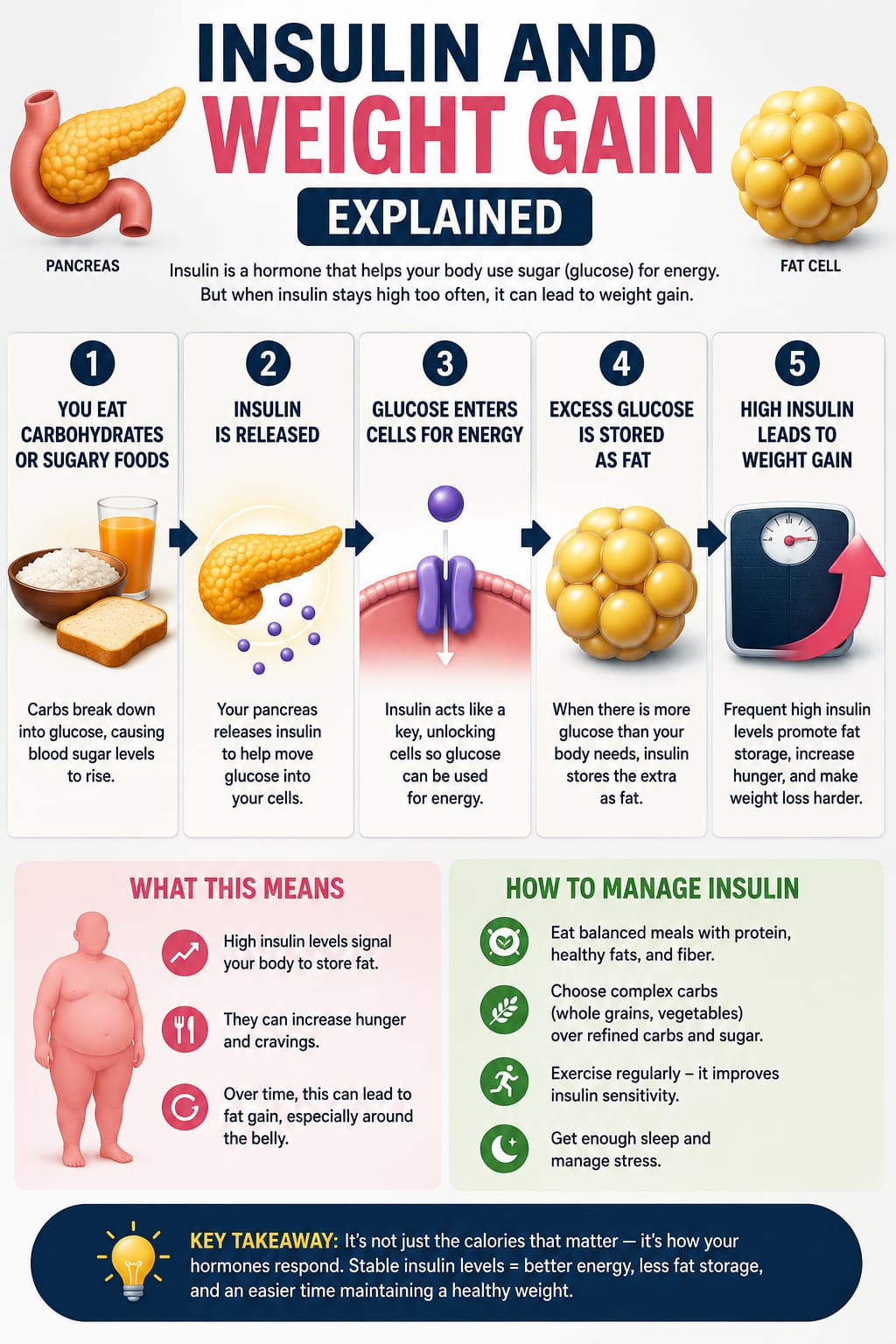
Insulin is a hormone made by your pancreas that helps regulate blood sugar (glucose). It allows glucose to move from your bloodstream into your body’s cells, where it is used for energy or stored for later use.
Does insulin cause weight gain?
Yes, insulin therapy can lead to weight gain, especially when people first start taking it or increase their dose. However, the weight gain is usually due to several factors rather than insulin itself being a “fat-making” hormone.
Why does insulin cause weight gain?
- Reduced loss of calories
- Before diabetes is well controlled, high blood sugar causes glucose to spill into the urine.
- This means the body loses calories.
- Once insulin lowers blood sugar, fewer calories are lost, so more calories are retained, which can lead to weight gain.
- Insulin promotes energy storage
- Insulin helps store excess glucose as glycogen in the liver and muscles.
- When glycogen stores are full, extra calories can be converted into body fat.
- Improved appetite
- Some people feel hungrier after starting insulin because their body is finally able to use glucose effectively.
- Eating more calories than needed can contribute to weight gain.
- Treating low blood sugar
- People taking insulin may occasionally experience hypoglycemia (low blood sugar).
- To correct it, they consume fast-acting carbohydrates.
- Frequent episodes and overtreating lows can add significant extra calories.
How much weight gain is common?
Many people gain about 4–10 pounds (2–5 kg) during the first year of insulin therapy, though this varies depending on:
- The type of diabetes
- Insulin dose
- Diet
- Physical activity
- Blood sugar control
Can weight gain be prevented?
Often, yes. Strategies include:
- Following a balanced meal plan.
- Monitoring portion sizes.
- Exercising regularly (at least 150 minutes of moderate activity per week if appropriate).
- Avoiding unnecessary snacks after treating low blood sugar.
- Working with your healthcare provider to adjust insulin doses carefully.
- Discussing whether medications that are weight-neutral or promote weight loss (when appropriate) can be used alongside insulin.
Is weight gain always a bad sign?
Not necessarily. If someone had uncontrolled diabetes and was losing weight because their body couldn’t use glucose properly, gaining some weight after starting insulin can be a sign that treatment is working. However, excessive weight gain can make diabetes management more difficult and increase the risk of cardiovascular disease.
Key takeaway
Insulin does not directly “make you fat.” Instead, it helps your body use and store nutrients more effectively. Weight gain can occur because your body stops losing calories through urine, stores more energy, appetite may improve, and treating low blood sugar can add extra calories. With healthy eating, regular exercise, and proper insulin management, many people can minimize or prevent significant weight gain.