What is body fat percentage?
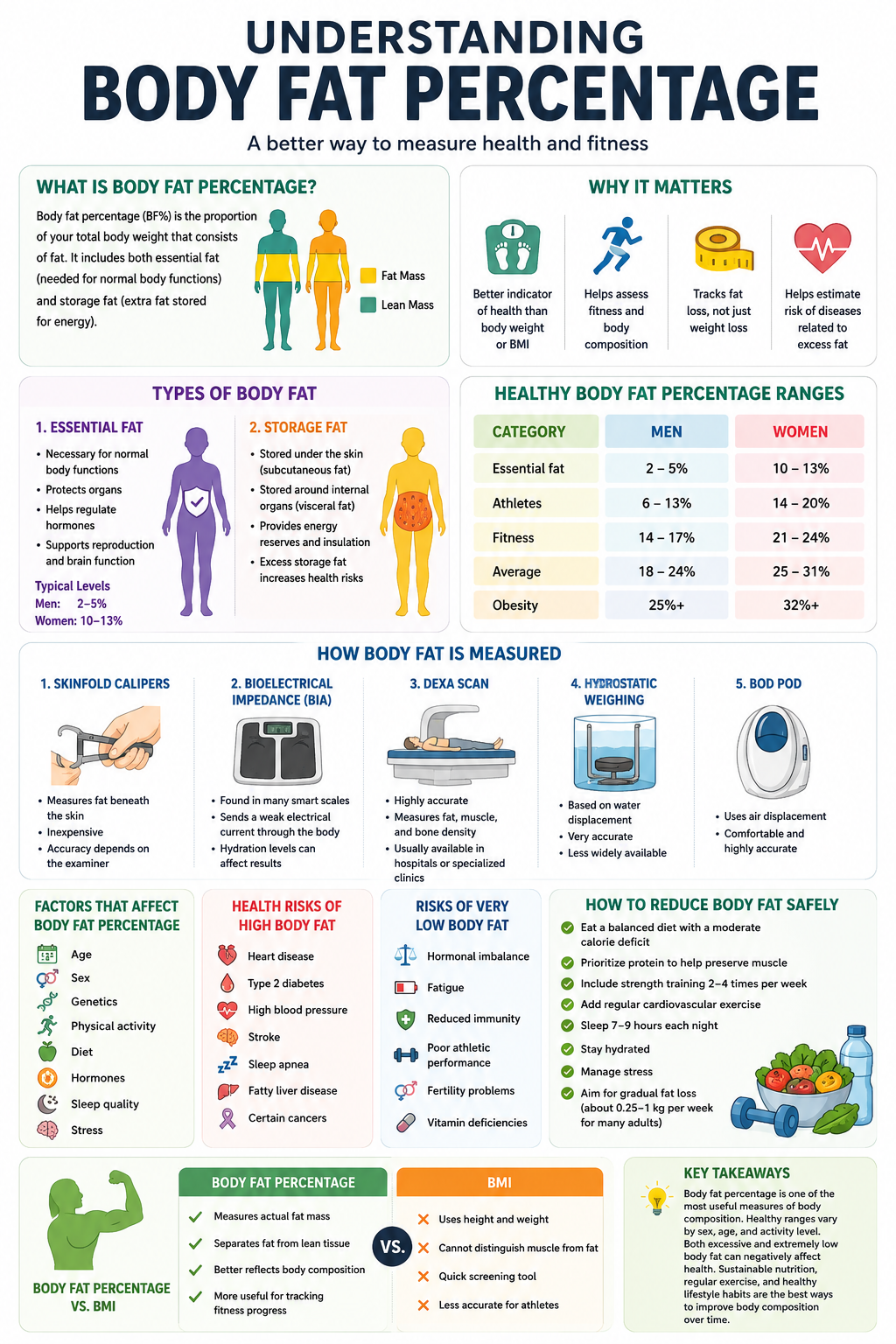
Body fat percentage (BF%) is the proportion of your total body weight that consists of fat. Unlike body weight or BMI, it distinguishes between fat mass and lean mass (muscles, bones, organs, and water).
For example:
- A person weighing 70 kg with 20% body fat has:
- 14 kg of body fat
- 56 kg of lean body mass
Why is body fat percentage important?
Body fat percentage is a better indicator of health than body weight alone because it:
- Measures body composition accurately.
- Helps assess fitness levels.
- Tracks fat loss instead of just weight loss.
- Estimates the risk of obesity-related diseases.
Essential vs. Storage Fat
There are two main types of body fat:
1. Essential Fat
- Necessary for normal body functions.
- Protects organs.
- Helps regulate hormones.
- Supports reproduction and brain function.
Typical levels:
- Men: 2–5%
- Women: 10–13%
2. Storage Fat
- Stored under the skin (subcutaneous fat).
- Stored around internal organs (visceral fat).
- Provides energy reserves and insulation.
- Excess storage fat increases health risks.
Healthy Body Fat Percentage Ranges
| Category | Men | Women |
|---|---|---|
| Essential fat | 2–5% | 10–13% |
| Athletes | 6–13% | 14–20% |
| Fitness | 14–17% | 21–24% |
| Average | 18–24% | 25–31% |
| Obesity | 25%+ | 32%+ |
How Body Fat is Measured
Common methods include:
1. Skinfold Calipers
- Measures fat beneath the skin.
- Inexpensive.
- Accuracy depends on the examiner.
2. Bioelectrical Impedance Analysis (BIA)
- Found in many smart scales.
- Sends a weak electrical current through the body.
- Hydration levels can affect results.
3. DEXA Scan
- Highly accurate.
- Measures fat, muscle, and bone density.
- Usually available in hospitals or specialized clinics.
4. Hydrostatic Weighing
- Based on water displacement.
- Very accurate but less widely available.
5. Bod Pod
- Uses air displacement.
- Comfortable and highly accurate.
Factors That Affect Body Fat Percentage
- Age
- Sex
- Genetics
- Physical activity
- Diet
- Hormones
- Sleep quality
- Stress
Health Risks of High Body Fat
Excess body fat, especially visceral fat, is linked to:
- Heart disease
- Type 2 diabetes
- High blood pressure
- Stroke
- Sleep apnea
- Fatty liver disease
- Certain cancers
Risks of Very Low Body Fat
Body fat that is too low may cause:
- Hormonal imbalance
- Fatigue
- Reduced immunity
- Poor athletic performance
- Fertility problems
- Vitamin deficiencies
How to Reduce Body Fat Safely
- Eat a balanced diet with a moderate calorie deficit.
- Prioritize protein to help preserve muscle.
- Include strength training 2–4 times per week.
- Add regular cardiovascular exercise.
- Sleep 7–9 hours each night.
- Stay hydrated.
- Manage stress.
- Aim for gradual fat loss (about 0.25–1 kg per week for many adults).
Body Fat Percentage vs. BMI
| BMI | Body Fat Percentage |
|---|---|
| Uses height and weight | Measures actual fat mass |
| Quick screening tool | Better reflects body composition |
| Cannot distinguish muscle from fat | Separates fat from lean tissue |
| Less accurate for athletes | More useful for tracking fitness progress |
Key Takeaways
- Body fat percentage is one of the most useful measures of body composition.
- Healthy ranges vary by sex, age, and activity level.
- Both excessive and extremely low body fat can negatively affect health.
- Sustainable nutrition, regular exercise, and healthy lifestyle habits are the best ways to improve body composition over time.