What is Sugar?
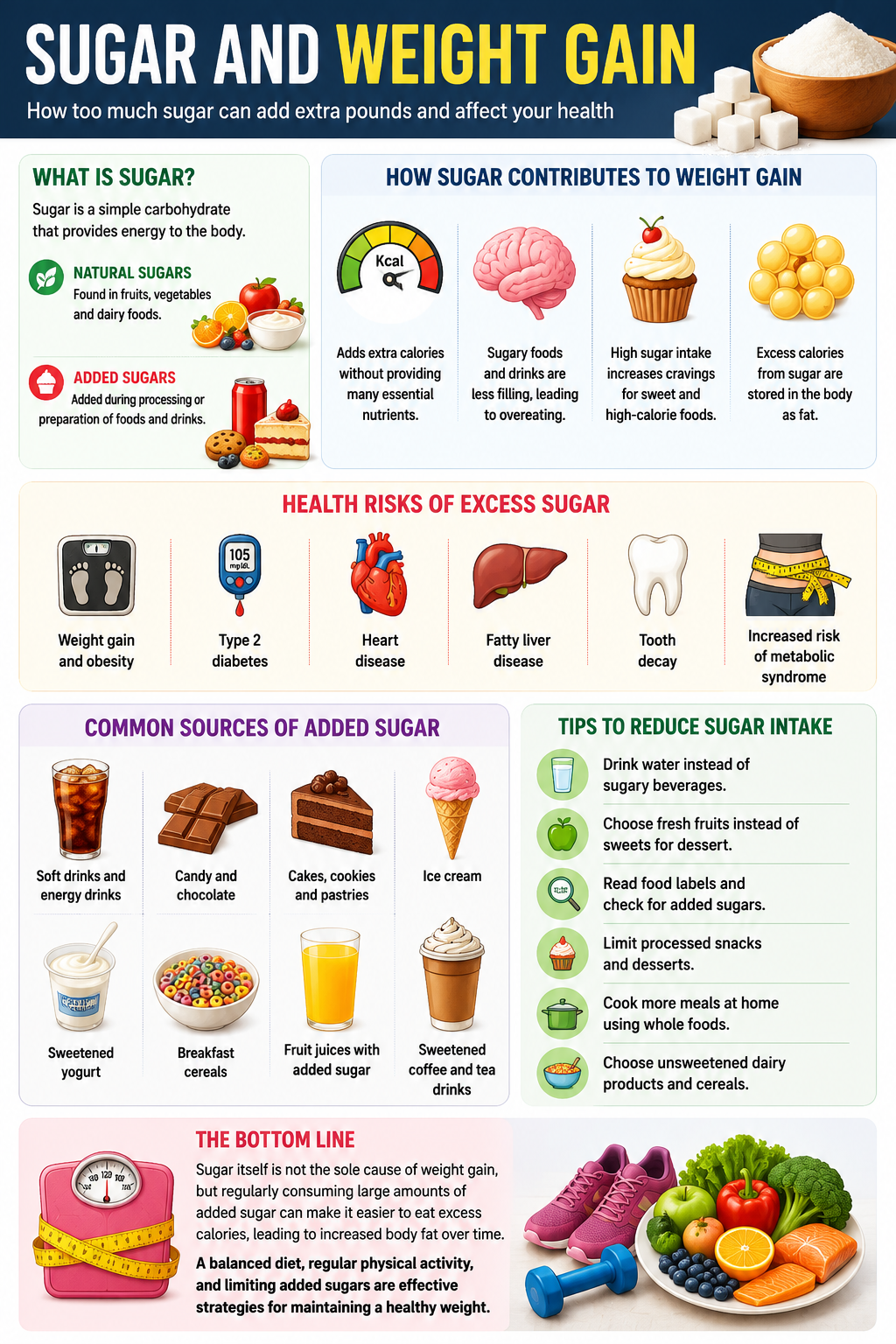
Sugar is a simple carbohydrate that provides energy to the body. It occurs naturally in fruits, vegetables, and dairy products, but it is also added to many processed foods and drinks such as soft drinks, candies, cakes, cookies, and sweetened cereals.
How Sugar Contributes to Weight Gain
Eating too much added sugar can contribute to weight gain because:
- It adds extra calories without providing many essential nutrients.
- Sugary drinks and snacks are less filling, making it easy to consume more calories.
- Frequent high sugar intake may increase cravings for sweet and high-calorie foods.
- Excess calories from sugar that are not used for energy can be stored as body fat.
Health Risks of Excess Sugar
Consuming too much added sugar is associated with:
- Weight gain and obesity
- Type 2 diabetes
- Heart disease
- Fatty liver disease
- Tooth decay
- Increased risk of metabolic syndrome
Common Sources of Added Sugar
- Soft drinks and energy drinks
- Candy and chocolate
- Cakes, cookies, and pastries
- Ice cream
- Sweetened yogurt
- Breakfast cereals
- Fruit juices with added sugar
- Sweetened coffee and tea drinks
Tips to Reduce Sugar Intake
- Drink water instead of sugary beverages.
- Choose fresh fruits instead of sweets for dessert.
- Read food labels and check for added sugars.
- Limit processed snacks and desserts.
- Cook more meals at home using whole foods.
- Choose unsweetened dairy products and cereals.
Conclusion
Sugar itself is not the sole cause of weight gain, but regularly consuming large amounts of added sugar can make it easier to eat excess calories, leading to increased body fat over time. A balanced diet, regular physical activity, and limiting added sugars are effective strategies for maintaining a healthy weight.
One response to “Sugar and weight gain”
Nice