1. Follow a Balanced Eating Pattern
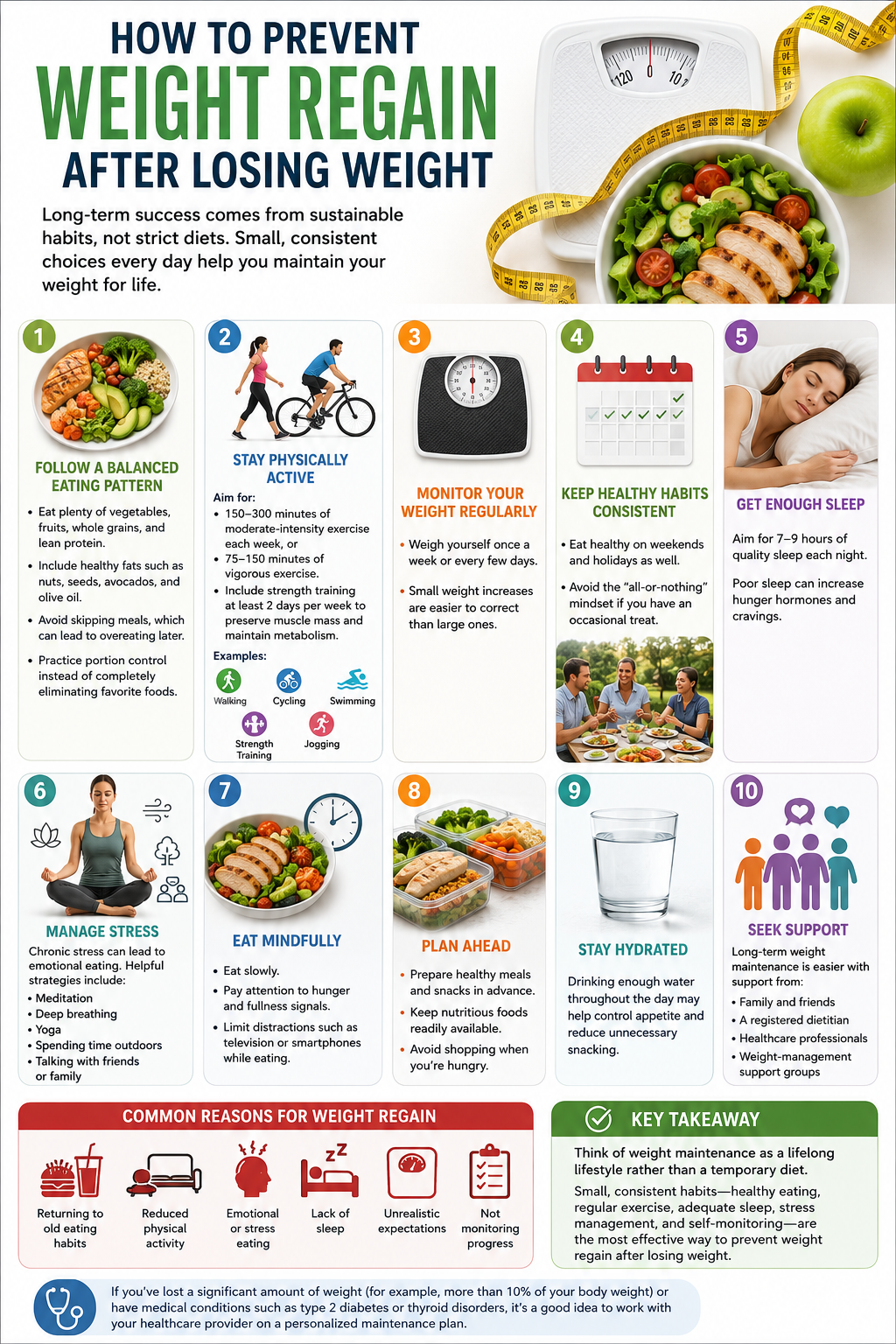
- Eat plenty of vegetables, fruits, whole grains, and lean protein.
- Include healthy fats such as nuts, seeds, avocados, and olive oil.
- Avoid skipping meals, which can lead to overeating later.
- Practice portion control instead of completely eliminating favorite foods.
2. Stay Physically Active
Aim for:
- 150–300 minutes of moderate-intensity exercise each week, or
- 75–150 minutes of vigorous exercise.
- Include strength training at least 2 days per week to preserve muscle mass and maintain metabolism.
Examples:
- Brisk walking
- Cycling
- Swimming
- Resistance training
- Jogging
3. Monitor Your Weight Regularly
- Weigh yourself once a week or every few days.
- Small weight increases are easier to correct than large ones.
4. Keep Healthy Habits Consistent
- Eat healthy on weekends and holidays as well.
- Avoid the “all-or-nothing” mindset if you have an occasional treat.
5. Get Enough Sleep
Aim for 7–9 hours of quality sleep each night. Poor sleep can increase hunger hormones and cravings.
6. Manage Stress
Chronic stress can lead to emotional eating.
Helpful strategies include:
- Meditation
- Deep breathing
- Yoga
- Spending time outdoors
- Talking with friends or family
7. Eat Mindfully
- Eat slowly.
- Pay attention to hunger and fullness signals.
- Limit distractions such as television or smartphones while eating.
8. Plan Ahead
- Prepare healthy meals and snacks in advance.
- Keep nutritious foods readily available.
- Avoid shopping when you’re hungry.
9. Stay Hydrated
Drinking enough water throughout the day may help control appetite and reduce unnecessary snacking.
10. Seek Support
Long-term weight maintenance is easier with support from:
- Family and friends
- A registered dietitian
- Healthcare professionals
- Weight-management support groups
Common Reasons for Weight Regain
- Returning to old eating habits
- Reduced physical activity
- Emotional or stress eating
- Lack of sleep
- Unrealistic expectations
- Not monitoring progress
Key Takeaway
Think of weight maintenance as a lifelong lifestyle rather than a temporary diet. Small, consistent habits—healthy eating, regular exercise, adequate sleep, stress management, and self-monitoring—are the most effective way to prevent weight regain after losing weight.