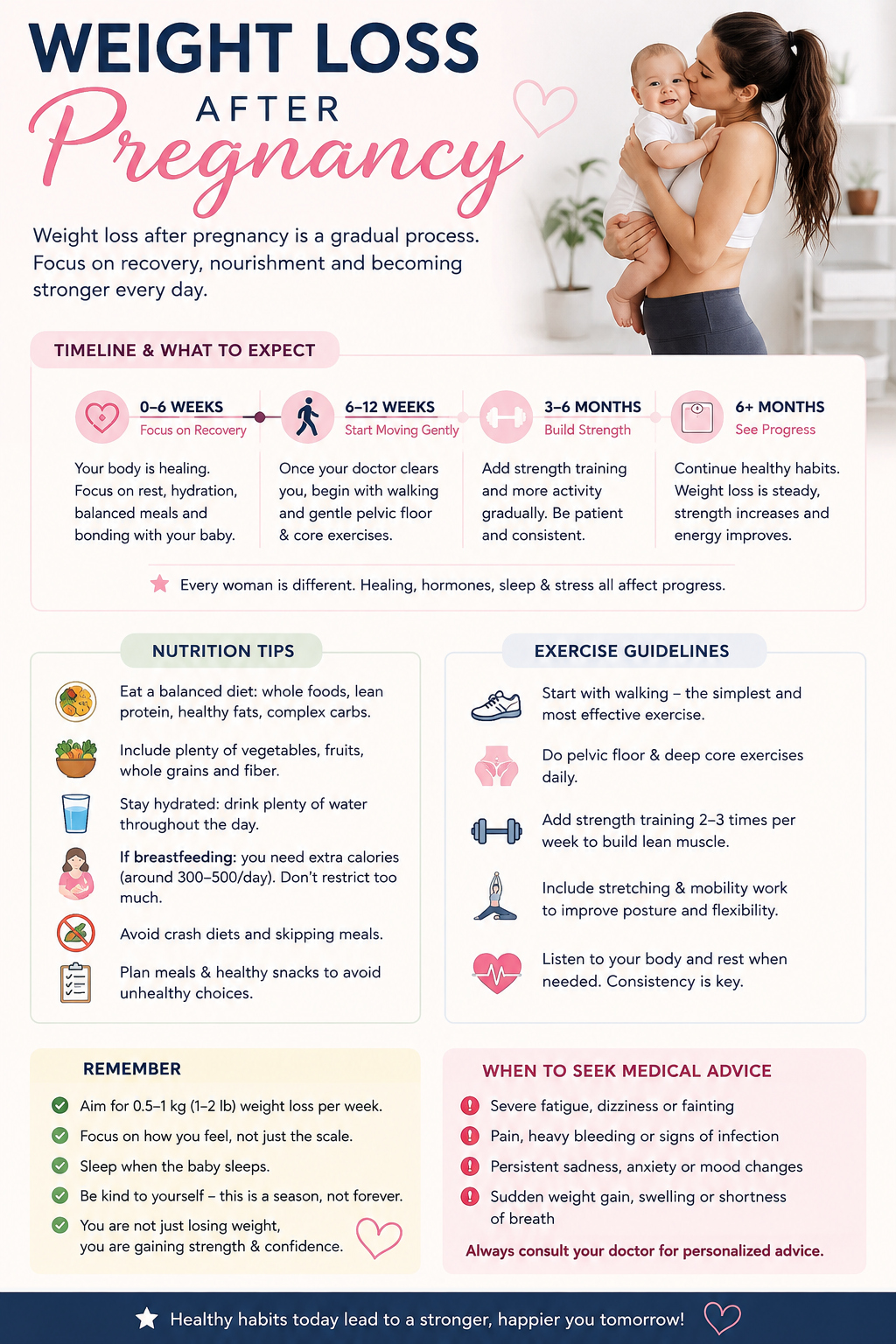
Weight loss after pregnancy is usually gradual rather than immediate. Your body needs time to recover from pregnancy and childbirth, and the right approach depends on whether you’re breastfeeding, how long ago you delivered, and your starting weight.
A healthy approach
- First weeks: Focus on recovery, hydration, sleep when possible, and nutritious meals rather than dieting.
- After your doctor/midwife clears exercise: Start with walking and gentle pelvic-floor/core exercises, then gradually add strength training.
- Food: Prioritize protein, vegetables, fruits, whole grains, healthy fats, and adequate fluids. Avoid crash diets and very large calorie restrictions.
- Breastfeeding: Your calorie and nutrient needs remain elevated, so aggressive dieting can make it harder to meet your nutritional needs and may affect milk supply.
- Weight-loss pace: A slow, steady loss is generally preferable to rapid weight loss. Some pregnancy weight also comes off naturally during the first several weeks.
- Strength training: Particularly useful postpartum because it helps rebuild muscle and functional strength rather than focusing only on the number on the scale.
- Sleep/stress: Poor sleep and stress can make appetite and weight management harder, so don’t interpret slow progress as failure.
When to get medical advice
Talk with your healthcare professional if you have very rapid weight changes, persistent exhaustion, dizziness, palpitations, significant swelling, depression/anxiety, or difficulty recovering from childbirth. Postpartum thyroid problems, anemia, and other conditions can sometimes affect weight and energy.
If you tell me (1) how many weeks/months postpartum you are, (2) your current weight and height, (3) whether you’re breastfeeding, and (4) whether you had a C-section or vaginal delivery, I can give you a practical postpartum weight-loss plan with meals and exercise.