How Berries Can Fit Into a Weight-Loss Diet
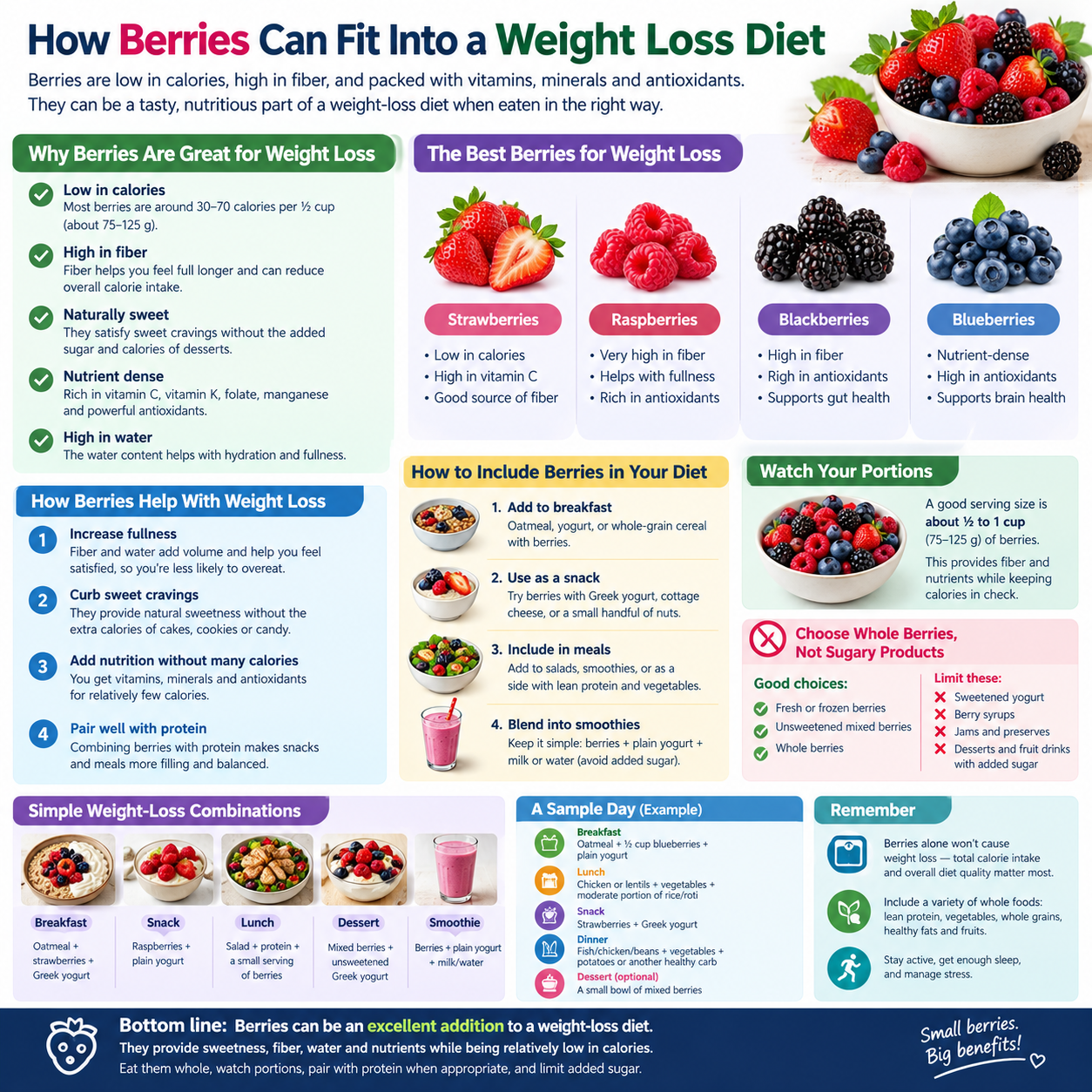
Berries such as strawberries, blueberries, raspberries, and blackberries can be a useful part of a weight-loss eating pattern. They are naturally sweet, contain water and dietary fiber, and provide vitamins and other beneficial plant compounds. The key is to use them as part of an overall balanced, calorie-conscious diet rather than relying on berries alone for weight loss.
1. Berries can help satisfy sweet cravings
When trying to lose weight, reducing foods such as cakes, cookies, candy, and sugary desserts can sometimes leave you craving something sweet. Berries can provide natural sweetness with substantially fewer calories than many traditional desserts.
For example, instead of a sugary dessert, you could have:
- Strawberries with plain Greek yogurt
- Mixed berries with cottage cheese
- Frozen blueberries with unsweetened yogurt
- Raspberries mixed into oatmeal
2. Their fiber can support fullness
Fiber helps add bulk to food and can contribute to feelings of fullness. Raspberries and blackberries are especially notable for their fiber content.
A useful strategy is to combine berries with a protein-rich food. Protein and fiber together can make a snack or breakfast more satisfying.
Example:
Plain Greek yogurt + ½–1 cup of mixed berries + a small amount of nuts or seeds.
3. Choose whole berries rather than sugary berry products
Whole or frozen berries are generally a better choice than products made primarily with added sugar.
Good options include:
- Fresh strawberries
- Fresh or frozen blueberries
- Frozen raspberries
- Frozen blackberries
- Unsweetened mixed berries
Be more careful with:
- Sweetened berry yogurt
- Berry syrups
- Jams and preserves
- Berry desserts
- Fruit drinks containing added sugar
The issue isn’t the berries themselves; it’s the added sugar and extra calories that can come with processed versions.
4. Pay attention to portions
Although berries can fit very well into a weight-loss diet, portion size still matters because total calorie intake matters for weight loss.
A practical serving is approximately ½ to 1 cup of berries. You can adjust the amount depending on your overall calorie needs and what else you’re eating.
You don’t have to completely eliminate other fruits either. Berries can simply be one of the fruits you regularly choose.
5. Add berries to breakfast
Berries can make a relatively simple breakfast more nutritious and satisfying.
Example breakfast:
- Oatmeal
- ½–1 cup berries
- Plain Greek yogurt or milk
- A small portion of nuts or seeds
This provides a combination of carbohydrates, protein, fiber, and healthy fats.
6. Use berries as a snack
Instead of reaching for biscuits, chips, or candy between meals, try:
1: Strawberries + Greek yogurt 2: Blueberries + a small handful of nuts
3: Blackberries + cottage cheese
The goal isn’t simply to eat berries; it’s to choose a snack that helps you stay satisfied without consuming excessive calories.
7. Berries can work in smoothies—but watch the extras
A smoothie containing berries can be nutritious, but calories can increase quickly when you add large amounts of peanut butter, honey, sugar, full-fat dairy, or other calorie-dense ingredients.
A simple version could contain:
Berries + plain yogurt + milk/water + ice
If you’re using a smoothie as a meal, adding a protein source can make it more substantial.
8. Fresh and frozen berries are both useful
You don’t need to buy fresh berries all the time. Unsweetened frozen berries can be convenient, less expensive, and easy to keep available.
Frozen berries work well in:
- Oatmeal
- Yogurt
- Smoothies
- Homemade desserts
9. Don’t depend on berries alone for weight loss
Berries are a helpful food, but no single food causes significant weight loss by itself. Weight loss generally depends on maintaining an appropriate calorie deficit over time while eating a nutritious diet.
A balanced weight-loss diet can include:
Protein: eggs, fish, chicken, beans, yogurt, lentils
Vegetables: leafy greens, carrots, cucumber, tomatoes, etc.
Fruit: berries and other whole fruits
Whole grains/starches: oats, whole-grain bread, potatoes, rice
Healthy fats: nuts, seeds, olive oil, avocado
A simple daily example
Breakfast:
Oatmeal + ½ cup blueberries + plain yogurt
Lunch:
Chicken or lentils + vegetables + a moderate portion of rice/roti
Snack:
Strawberries + Greek yogurt
Dinner:
Fish/chicken/beans + vegetables + potatoes or another appropriate carbohydrate
Dessert, if desired:
A small bowl of mixed berries
Bottom line
Berries can be an excellent addition to a weight-loss diet because they provide sweetness, fiber, water, and nutrients while being relatively low in calories. The most effective approach is to eat them whole, watch portions, pair them with protein when appropriate, and limit berry products containing added sugar.