1. Keep eating patterns consistent
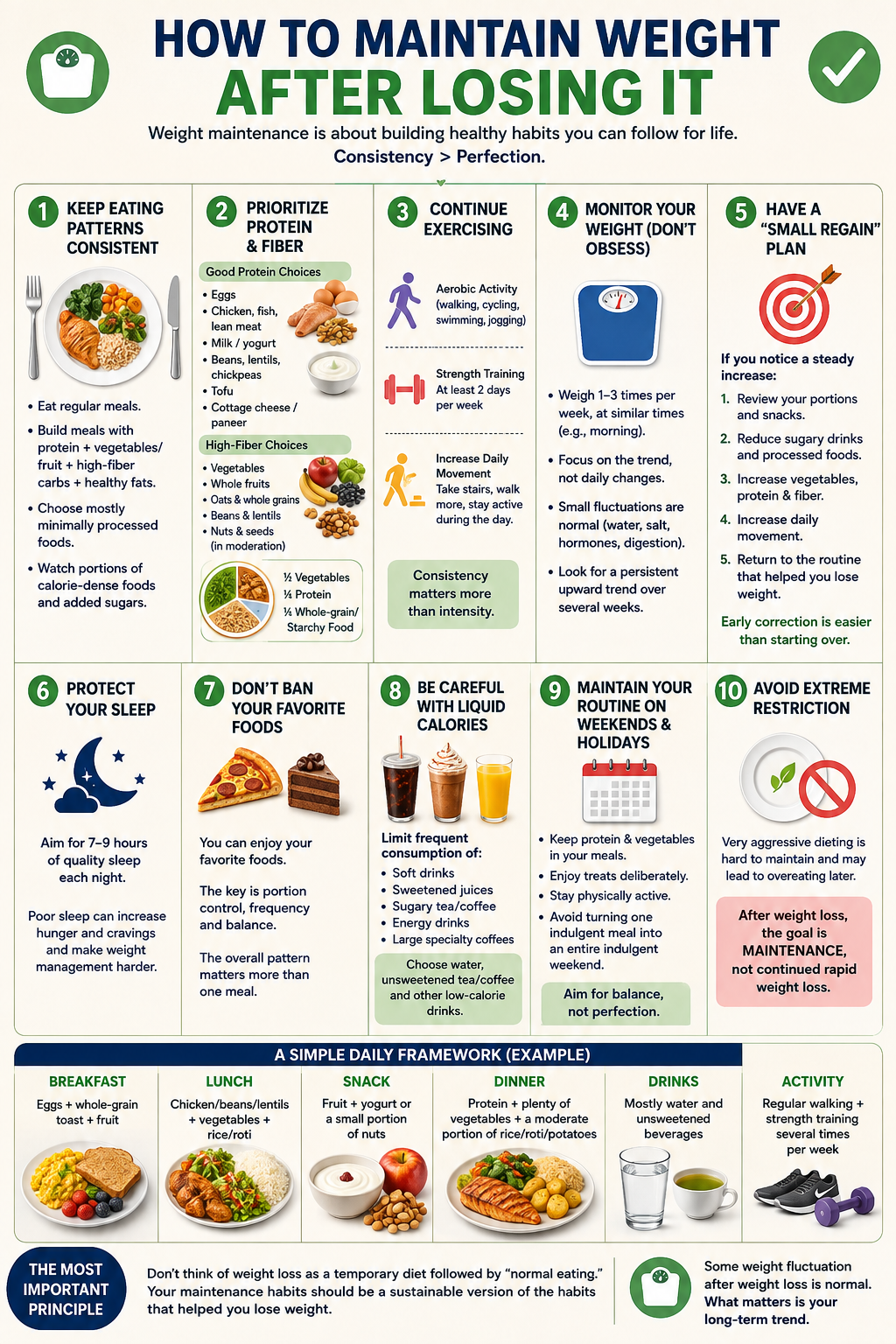
After weight loss, avoid returning to your old eating habits all at once.
- Eat regular meals rather than repeatedly skipping meals and becoming very hungry.
- Build meals around protein + vegetables/fruit + high-fiber carbohydrates + a moderate amount of healthy fat.
- Choose mostly minimally processed foods, while still allowing occasional treats.
- Watch portions of calorie-dense foods such as fried foods, sweets, sugary drinks, sauces, and large amounts of oil.
2. Prioritize protein and fiber
Protein and fiber can help you stay satisfied.
Good protein choices:
- Eggs
- Chicken, fish, or lean meat
- Milk/yogurt
- Beans, lentils and chickpeas
- Tofu
- Cottage cheese/paneer
High-fiber choices:
- Vegetables
- Whole fruits
- Oats and whole grains
- Beans and lentils
- Nuts and seeds in moderate portions
A simple meal structure is ½ vegetables, ¼ protein, and ¼ whole-grain/starchy food, adjusting portions according to your individual needs.
3. Continue exercising
Physical activity is particularly useful for preventing regain.
Aim for a combination of:
- Aerobic activity: walking, cycling, swimming, jogging, etc.
- Strength training: ideally at least 2 days per week.
- Regular daily movement—walking more, taking stairs, household activities, etc.
You don’t need to exercise excessively. Consistency matters more than occasional very hard workouts.
4. Monitor your weight without obsessing
Consider weighing yourself regularly—such as once or several times per week under similar conditions.
The goal isn’t to react to every small fluctuation. Weight naturally changes because of water, salt, carbohydrates, digestion, hormones, and other factors.
Instead, look for a persistent upward trend over several weeks.
5. Have a “small regain” plan
Don’t wait until you’ve regained a large amount of weight.
If you notice a sustained increase:
- Review your food portions and snacks.
- Reduce sugary drinks and highly processed foods.
- Increase vegetables, protein and fiber.
- Increase daily movement.
- Return to the eating routine that helped you lose weight.
Think of it as an early correction rather than starting another extreme diet.
6. Protect your sleep
Poor sleep can make appetite and food cravings harder to manage.
For most adults, 7–9 hours of sleep per night is a reasonable target. Try to maintain a regular sleep schedule and address factors that consistently interfere with sleep.
7. Don’t completely ban your favorite foods
A maintenance diet that feels miserable is difficult to sustain.
You can include foods you enjoy—pizza, desserts, restaurant meals, etc.—while controlling frequency and portions. The overall pattern matters much more than one meal.
8. Be careful with liquid calories
Drinks can add substantial calories without making you feel as full as solid food.
Limit frequent consumption of:
- Soft drinks
- Sweetened juices
- Sugary tea/coffee
- Energy drinks
- Large specialty coffees
Water, unsweetened tea/coffee, and other low-calorie beverages can make maintenance easier.
9. Maintain your routine during weekends and holidays
A common problem is eating carefully during the week and then significantly overeating on weekends.
Instead of trying to be perfect:
- Keep protein and vegetables in your meals.
- Enjoy treats deliberately.
- Stay physically active.
- Avoid turning one indulgent meal into an entire indulgent weekend.
10. Avoid extreme restriction
Very aggressive dieting can be difficult to maintain and may increase the likelihood of overeating afterward.
The goal after weight loss is maintenance, not continued rapid weight loss.
A simple daily framework
Breakfast:
Eggs + whole-grain toast + fruit
Lunch:
Chicken/beans/lentils + vegetables + rice/roti
Snack:
Fruit + yogurt or a small portion of nuts
Dinner:
Protein + plenty of vegetables + a moderate portion of rice/roti/potatoes
Drinks:
Mostly water and unsweetened beverages
Activity:
Regular walking + strength training several times per week
The most important principle
Don’t think of weight loss as a temporary diet followed by “normal eating.” Your maintenance habits should be a sustainable version of the habits that helped you lose weight.
And remember: some weight fluctuation after weight loss is normal. What matters is your long-term trend.
If you tell me your age, sex, height, current weight, previous weight, and typical daily activity, I can also give you a personalized weight-maintenance calorie estimate and a Pakistani-style meal plan.