Testosterone and Fat Loss in Men and Women: Understanding the Connection
Testosterone is often associated with men, but it is an important hormone for both men and women. It plays a key role in building muscle, maintaining bone health, supporting energy levels, and influencing body composition. Healthy testosterone levels can make it easier to build lean muscle and reduce body fat, while low levels may contribute to increased fat storage and reduced physical performance.
What Is Testosterone?
Testosterone is a sex hormone produced primarily in the testes in men and in smaller amounts by the ovaries in women. The adrenal glands also produce small amounts of testosterone in both sexes.
Although men naturally have much higher testosterone levels than women, the hormone is essential for everyone.
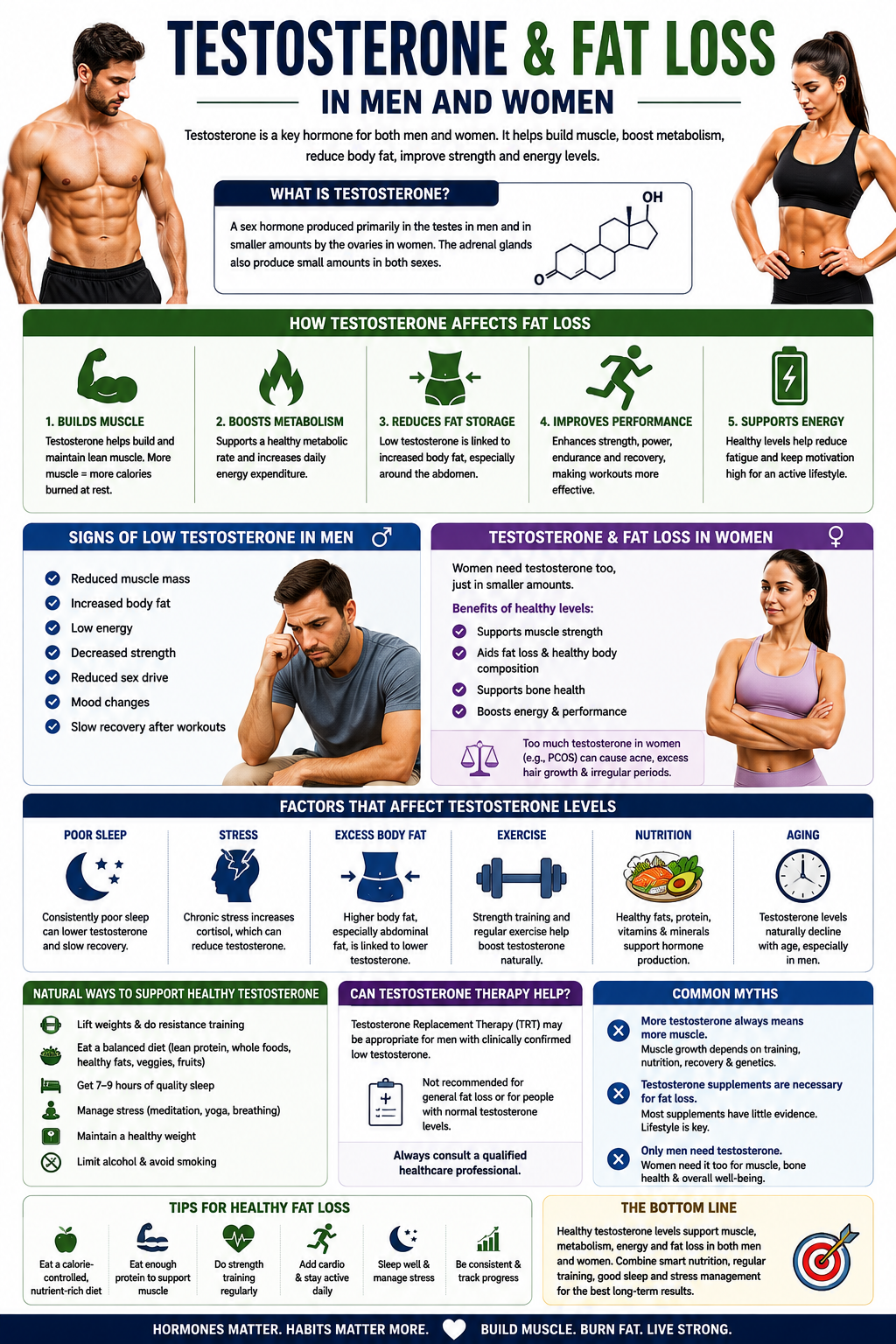
How Testosterone Affects Fat Loss
Testosterone influences body composition in several ways:
1. Supports Muscle Growth
Muscle tissue burns more calories than fat tissue, even while at rest. Testosterone helps build and maintain lean muscle mass, which can increase daily energy expenditure.
2. Boosts Metabolism
Healthy testosterone levels help support a normal metabolic rate. A higher proportion of lean muscle may contribute to greater calorie burning throughout the day.
3. Reduces Fat Storage
Research suggests that low testosterone levels are associated with increased body fat, particularly around the abdomen. Maintaining healthy hormone levels may support a healthier body composition.
4. Improves Exercise Performance
Testosterone contributes to:
- Muscle strength
- Power
- Endurance
- Recovery after exercise
Better performance can make it easier to stay active and burn calories consistently.
5. Supports Energy Levels
Low testosterone may lead to fatigue and reduced motivation, making regular physical activity more challenging.
Signs of Low Testosterone in Men
Low testosterone may cause:
- Reduced muscle mass
- Increased body fat
- Low energy
- Decreased strength
- Reduced sex drive
- Mood changes
- Difficulty recovering after workouts
These symptoms can have multiple causes, so medical evaluation is important.
Testosterone and Fat Loss in Women
Women also need testosterone, but in much smaller amounts.
Healthy testosterone levels in women help support:
- Muscle strength
- Bone health
- Energy
- Physical performance
- Healthy body composition
However, too much testosterone in women—such as with some cases of polycystic ovary syndrome (PCOS)—can contribute to health issues including acne, excess hair growth, and irregular menstrual cycles.
Factors That Affect Testosterone Levels
Several lifestyle factors can influence testosterone production:
Poor Sleep
Consistently getting too little sleep may reduce testosterone production and impair recovery.
Chronic Stress
Long-term stress increases cortisol, which can interfere with normal hormone balance.
Excess Body Fat
Higher levels of body fat, especially abdominal fat, are associated with lower testosterone levels in many men.
Physical Activity
Regular strength training and moderate exercise can support healthy hormone function.
Nutrition
A balanced diet that provides adequate protein, healthy fats, vitamins, and minerals supports overall hormone health.
Aging
Testosterone levels naturally decline with age, particularly in men, although the rate varies between individuals.
Natural Ways to Support Healthy Testosterone Levels
Exercise Regularly
Include:
- Strength training 2–4 times per week
- Cardiovascular exercise
- Mobility and flexibility work
Eat a Balanced Diet
Focus on:
- Lean proteins
- Fruits
- Vegetables
- Whole grains
- Healthy fats from foods such as nuts, seeds, olive oil, and avocados
Get Enough Sleep
Aim for 7–9 hours of quality sleep each night.
Maintain a Healthy Weight
Losing excess body fat may help improve testosterone levels in some individuals, particularly men with overweight or obesity.
Manage Stress
Practice healthy stress-management techniques such as:
- Meditation
- Deep breathing
- Walking
- Yoga
- Spending time outdoors
Avoid Excessive Alcohol and Smoking
Limiting alcohol intake and avoiding tobacco products can support overall health, including hormone function.
Can Testosterone Therapy Help with Weight Loss?
Testosterone replacement therapy (TRT) may be appropriate for some people with clinically confirmed testosterone deficiency after evaluation by a qualified healthcare professional. It is not recommended as a general weight-loss treatment for people with normal testosterone levels.
TRT has potential benefits and risks, so treatment decisions should always be made under medical supervision.
Common Myths About Testosterone
Myth: More testosterone always means more muscle.
Fact: Muscle growth depends on training, nutrition, recovery, genetics, and overall health—not testosterone alone.
Myth: Testosterone supplements are necessary for fat loss.
Fact: Many over-the-counter “testosterone boosters” have limited evidence supporting their effectiveness. Healthy lifestyle habits remain the foundation of fat loss.
Myth: Only men need testosterone.
Fact: Women also produce testosterone, and it plays an important role in muscle function, bone health, and overall well-being.
Tips for Healthy Fat Loss
- Follow a balanced, nutrient-rich diet.
- Eat enough protein to support muscle maintenance.
- Perform strength training regularly.
- Include moderate cardiovascular exercise.
- Stay physically active throughout the day.
- Get adequate sleep.
- Manage stress.
- Track your progress over time rather than relying on quick fixes.
Final Thoughts
Testosterone is an important hormone that influences muscle mass, metabolism, energy levels, and body composition in both men and women. Healthy testosterone levels can support fat loss by helping maintain lean muscle and encouraging an active lifestyle, but they are only one part of the equation. Sustainable weight loss comes from combining balanced nutrition, regular exercise, quality sleep, stress management, and consistent healthy habits. If you suspect you have symptoms of low testosterone, consult a healthcare professional for proper evaluation and guidance.