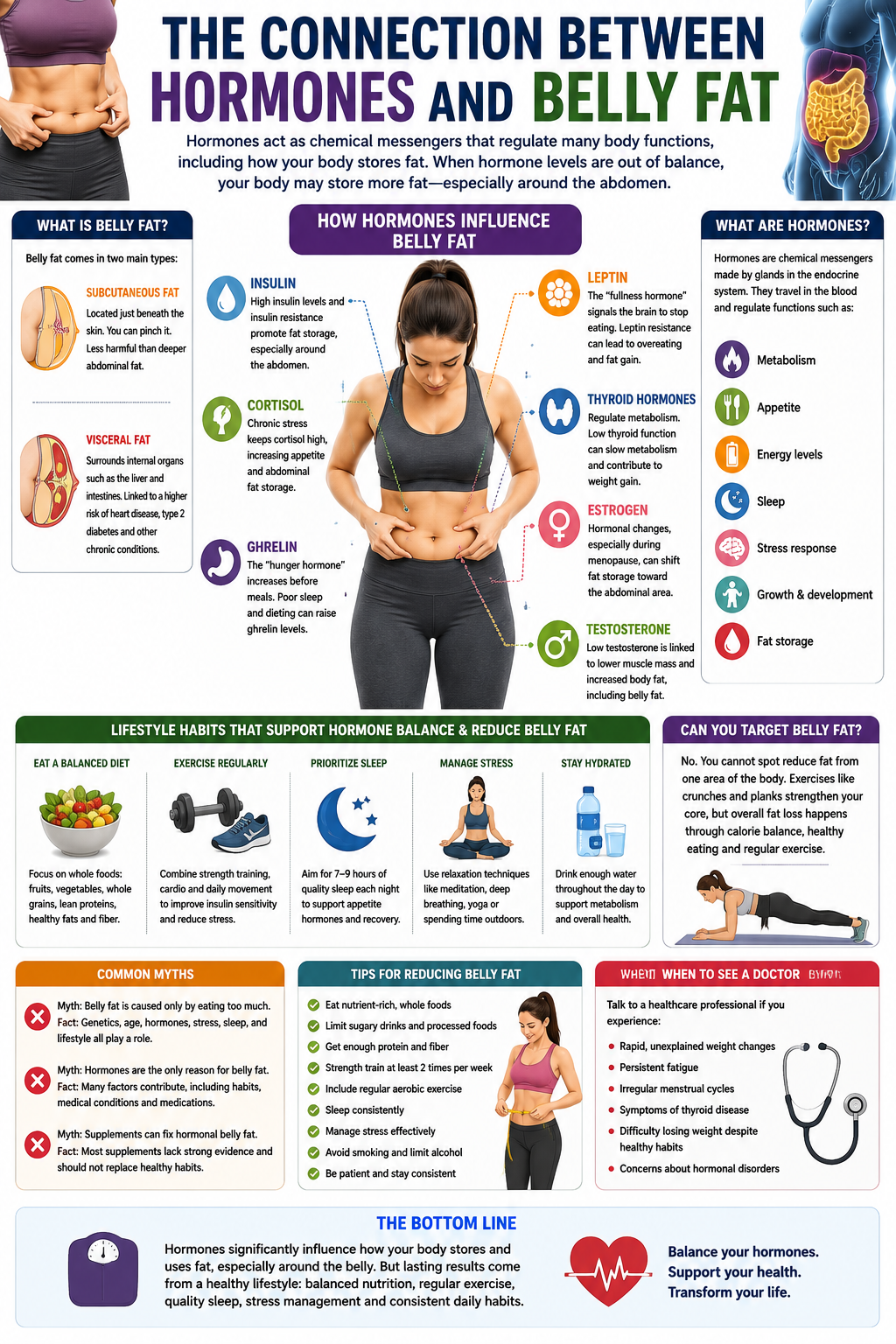
The Connection Between Hormones and Belly Fat: Understanding the Science
Belly fat is one of the most common concerns for people trying to lose weight. While diet and physical activity play major roles, hormones also influence where your body stores fat and how easily it can be lost. Hormones regulate appetite, metabolism, stress response, blood sugar, and fat storage, making hormonal balance an important part of overall health and weight management.
What Are Hormones?
Hormones are chemical messengers produced by glands in the endocrine system. They travel through the bloodstream and help regulate many body functions, including:
- Metabolism
- Appetite
- Energy levels
- Sleep
- Stress response
- Growth and development
- Fat storage
When hormone levels are out of balance, they may affect body composition, including the amount of fat stored around the abdomen.
What Is Belly Fat?
Belly fat includes two main types:
Subcutaneous Fat
This is the fat located just beneath the skin. It can be pinched and is generally less harmful than deeper abdominal fat.
Visceral Fat
Visceral fat surrounds internal organs such as the liver, pancreas, and intestines. Excess visceral fat is associated with a higher risk of conditions such as heart disease, type 2 diabetes, and metabolic syndrome.
Hormones That Influence Belly Fat
1. Insulin
Insulin helps move glucose from the bloodstream into cells for energy.
When insulin levels remain high over time—often due to insulin resistance—your body may store more fat, especially around the abdomen.
Ways to support healthy insulin function:
- Eat fiber-rich foods.
- Choose whole grains over refined carbohydrates.
- Exercise regularly.
- Maintain a healthy body weight.
2. Cortisol
Cortisol is often called the stress hormone.
Short-term increases are normal, but chronic stress can keep cortisol elevated. High cortisol levels are associated with increased appetite and may contribute to greater fat storage around the abdomen in some people.
Ways to manage cortisol:
- Get enough sleep.
- Practice relaxation techniques.
- Exercise regularly without overtraining.
- Spend time outdoors and engage in enjoyable activities.
3. Leptin
Leptin is produced by fat cells and helps signal fullness to the brain.
Some individuals with obesity may develop leptin resistance, where the brain responds less effectively to leptin’s signals, making appetite regulation more difficult.
4. Ghrelin
Ghrelin is known as the hunger hormone.
It increases before meals and decreases after eating. Poor sleep and highly restrictive diets may increase ghrelin levels, making hunger more difficult to manage.
5. Thyroid Hormones
The thyroid gland produces hormones that regulate metabolism.
An underactive thyroid (hypothyroidism) can slow metabolism and contribute to weight gain. Anyone experiencing symptoms such as persistent fatigue, cold intolerance, or unexplained weight changes should seek medical evaluation.
6. Estrogen
Estrogen influences fat distribution, particularly in women.
Hormonal changes during menopause can shift fat storage toward the abdominal area, even without major changes in body weight.
7. Testosterone
Testosterone helps support lean muscle mass and healthy body composition.
Lower testosterone levels in men are associated with increased body fat, including abdominal fat. Women also need testosterone in smaller amounts for muscle and overall health.
Lifestyle Habits That Support Hormone Balance
Eat a Balanced Diet
Focus on:
- Fruits
- Vegetables
- Whole grains
- Lean proteins
- Healthy fats
- Fiber-rich foods
Exercise Regularly
Include:
- Strength training
- Cardiovascular exercise
- Daily movement such as walking
Prioritize Sleep
Aim for 7–9 hours of quality sleep each night to support appetite-regulating hormones and recovery.
Manage Stress
Healthy stress-management techniques include:
- Meditation
- Yoga
- Deep breathing
- Spending time with friends and family
- Enjoying hobbies
Stay Hydrated
Drinking enough water supports overall health and may help regulate appetite.
Can You Target Belly Fat?
No. Despite many marketing claims, spot reduction—losing fat from only one area of the body through specific exercises—is not supported by current evidence.
Exercises like crunches and planks strengthen abdominal muscles but do not selectively burn belly fat. Overall fat loss through balanced nutrition, regular exercise, and healthy lifestyle habits is the most effective approach.
Common Myths About Belly Fat
Myth: Belly fat is caused only by eating too much.
Fact: Belly fat is influenced by many factors, including genetics, age, physical activity, sleep, stress, diet, and hormones.
Myth: Hormones are the only reason people gain belly fat.
Fact: Hormones are one factor among many. Lifestyle habits, medical conditions, medications, and genetics also contribute.
Myth: Fat-burning supplements can fix hormonal belly fat.
Fact: Most supplements have limited evidence for reducing belly fat, and they should not replace healthy eating and regular physical activity.
Tips for Reducing Belly Fat
- Eat a nutrient-rich, balanced diet.
- Limit sugary drinks and highly processed foods.
- Get enough protein and fiber.
- Perform strength training at least twice per week.
- Include regular aerobic exercise.
- Sleep consistently.
- Manage stress effectively.
- Avoid smoking and limit alcohol.
- Be patient and focus on sustainable habits.
When to See a Healthcare Professional
Consider speaking with a healthcare professional if you experience:
- Rapid, unexplained weight changes
- Persistent fatigue
- Irregular menstrual cycles
- Symptoms of thyroid disease
- Difficulty losing weight despite consistent healthy habits
- Concerns about possible hormonal disorders
A proper evaluation can help identify whether an underlying medical condition is contributing to weight changes.
Final Thoughts
Hormones play an important role in how your body stores and uses fat, including belly fat, but they are only one part of the picture. A healthy diet, regular exercise, quality sleep, stress management, and consistent daily habits remain the foundation of successful weight management. If you suspect a hormonal imbalance is affecting your health or weight, seek medical advice for appropriate testing and personalized treatment.


admin
Amazing research