Why Crash Diets Fail: The Truth About Rapid Weight Loss
Crash diets promise quick and dramatic weight loss, making them appealing to people who want fast results. However, these diets are often extremely restrictive and difficult to maintain. While you may lose weight initially, the results are usually temporary, and crash dieting can negatively affect your health and metabolism. Understanding why crash diets fail can help you choose a safer, more sustainable approach to weight loss.
What Is a Crash Diet?
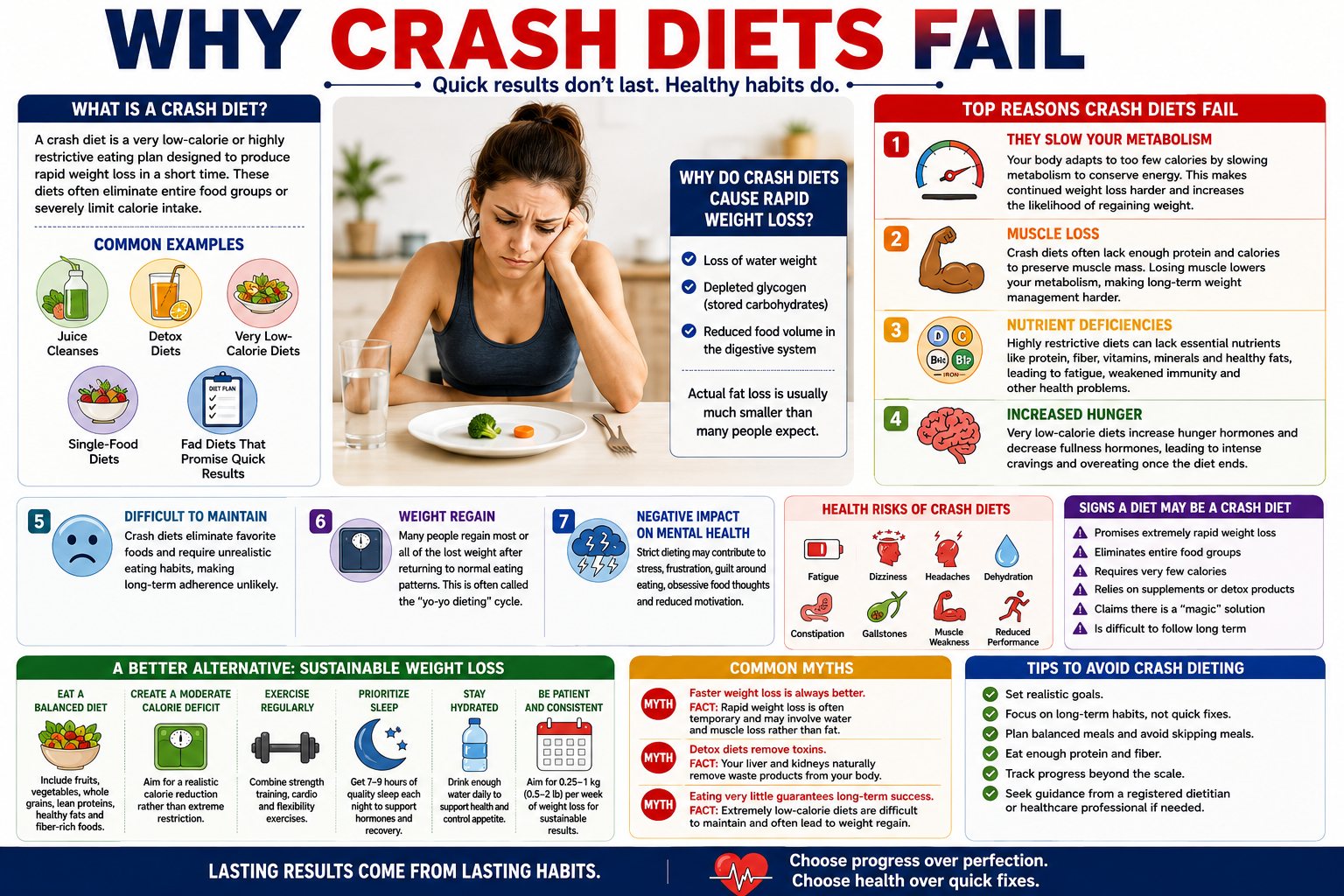
A crash diet is a very low-calorie or highly restrictive eating plan designed to produce rapid weight loss in a short period. These diets often eliminate entire food groups or severely limit calorie intake.
Common examples include:
- Juice cleanses
- Detox diets
- Extremely low-calorie diets
- Single-food diets
- Fad diets that promise quick results
Why Do Crash Diets Cause Rapid Weight Loss?
The initial weight loss from crash diets is often due to:
- Loss of water weight
- Depleted glycogen (stored carbohydrates)
- Reduced food volume in the digestive system
Actual fat loss is usually much smaller than many people expect.
Reasons Crash Diets Fail
1. They Slow Your Metabolism
When you eat too few calories, your body adapts by slowing its metabolic rate to conserve energy. This makes continued weight loss more difficult and increases the likelihood of regaining weight.
2. Muscle Loss
Crash diets often do not provide enough protein or calories to preserve muscle mass. Losing muscle lowers your resting metabolic rate, making long-term weight management harder.
3. Nutrient Deficiencies
Highly restrictive diets can lack essential nutrients such as:
- Protein
- Fiber
- Vitamins
- Minerals
- Healthy fats
These deficiencies may lead to fatigue, weakened immunity, poor concentration, and other health problems.
4. Increased Hunger
Very low-calorie diets increase hunger hormones and decrease fullness hormones. This can lead to intense cravings and overeating once the diet ends.
5. Difficult to Maintain
Crash diets often eliminate favorite foods and require unrealistic eating habits, making long-term adherence unlikely.
6. Weight Regain
Many people regain most or all of the lost weight after returning to normal eating patterns. This is often called the “yo-yo dieting” cycle.
7. Negative Impact on Mental Health
Strict dieting may contribute to:
- Stress
- Frustration
- Guilt around eating
- Obsessive food thoughts
- Reduced motivation
A healthier relationship with food is generally more sustainable.
Health Risks of Crash Diets
Crash dieting may increase the risk of:
- Fatigue
- Dizziness
- Headaches
- Dehydration
- Constipation
- Gallstones
- Muscle weakness
- Reduced physical performance
- Nutrient deficiencies
People with medical conditions should consult a healthcare professional before making significant dietary changes.
Signs a Diet May Be a Crash Diet
Be cautious if a diet:
- Promises extremely rapid weight loss.
- Eliminates entire food groups without medical reason.
- Requires very few calories.
- Relies on supplements or detox products.
- Claims there is a “magic” solution.
- Is difficult to follow long term.
A Better Alternative: Sustainable Weight Loss
Healthy weight loss focuses on gradual, lasting lifestyle changes.
Eat a Balanced Diet
Include:
- Fruits
- Vegetables
- Whole grains
- Lean proteins
- Healthy fats
- Fiber-rich foods
Create a Moderate Calorie Deficit
Aim for a realistic calorie reduction rather than extreme restriction.
Exercise Regularly
Combine:
- Strength training
- Cardiovascular exercise
- Flexibility and mobility work
Prioritize Sleep
Getting 7–9 hours of quality sleep each night supports appetite regulation and recovery.
Stay Hydrated
Drinking enough water supports overall health and may help with appetite management.
Be Patient
A gradual weight loss of about 0.25–1 kg (0.5–2 lb) per week is generally considered a sustainable target for many adults, though individual needs vary.
Tips to Avoid Crash Dieting
- Set realistic goals.
- Focus on long-term habits instead of quick fixes.
- Plan balanced meals.
- Avoid skipping meals.
- Eat enough protein and fiber.
- Track progress beyond the scale.
- Seek guidance from a registered dietitian or healthcare professional if needed.
Common Myths About Crash Diets
Myth: Faster weight loss is always better.
Fact: Rapid weight loss is often temporary and may involve water and muscle loss rather than fat.
Myth: Detox diets remove toxins.
Fact: Your liver and kidneys naturally remove waste products from your body.
Myth: Eating very little guarantees long-term success.
Fact: Extremely low-calorie diets are difficult to maintain and often lead to weight regain.
Final Thoughts
Crash diets may produce quick results, but they rarely lead to lasting weight loss. Their restrictive nature can slow metabolism, reduce muscle mass, increase hunger, and contribute to weight regain. Instead of chasing rapid results, focus on balanced nutrition, regular exercise, adequate sleep, and sustainable lifestyle changes. Healthy habits practiced consistently are far more effective for achieving and maintaining a healthy weight over the long term.