A Complete Guide to Reaching Your Fitness Goals
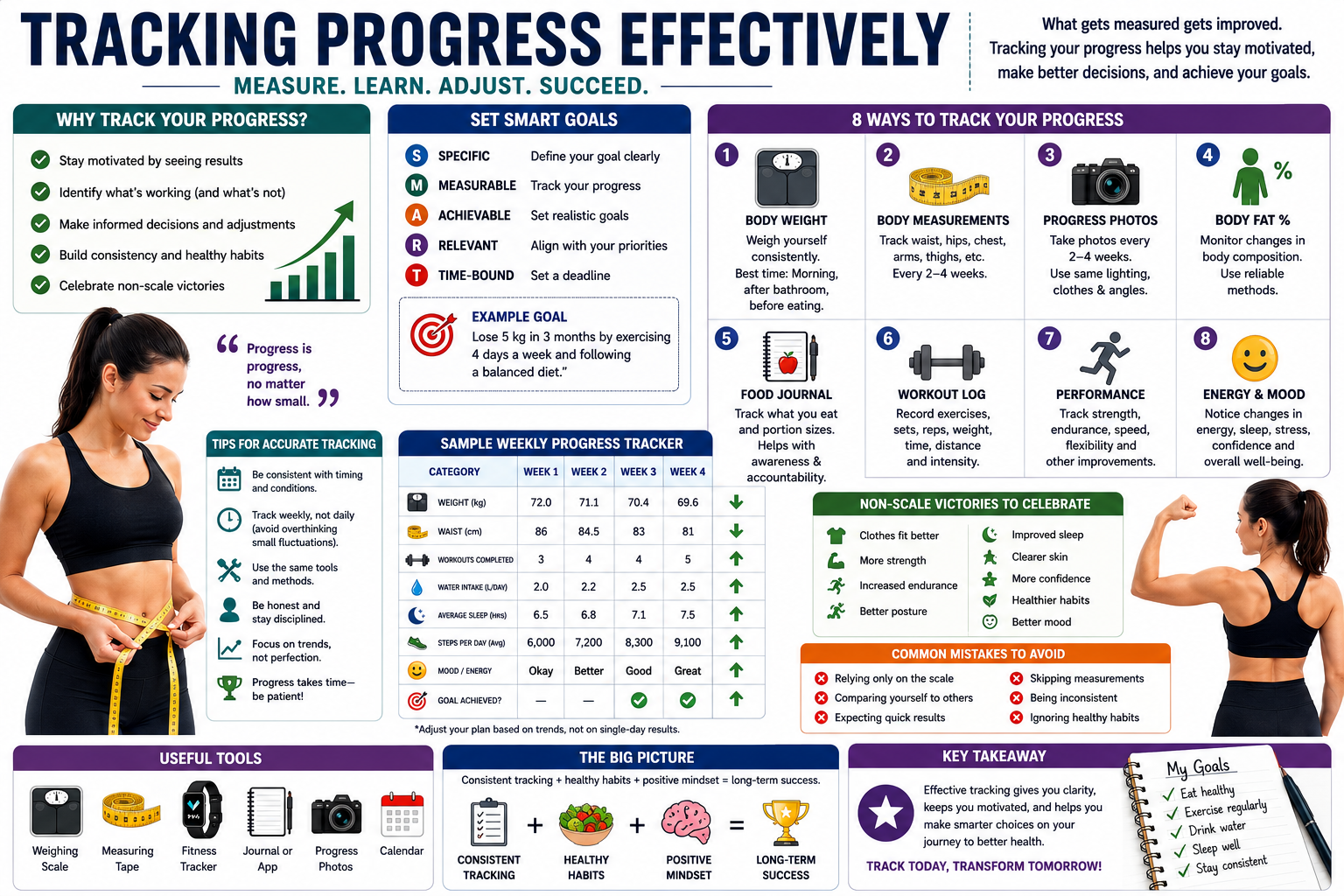
Tracking your progress is one of the most important parts of any weight loss or fitness journey. Without monitoring your results, it can be difficult to know whether your efforts are working or where adjustments are needed. Effective progress tracking helps you stay motivated, identify improvements, and achieve long-term success through consistent, healthy habits.
Why Tracking Progress Matters
Monitoring your progress provides valuable insights into your health and fitness journey. It helps you:
- Stay motivated by seeing measurable improvements.
- Identify what is working and what needs adjustment.
- Set realistic and achievable goals.
- Build healthy habits through consistency.
- Celebrate milestones beyond the number on the scale.
Set SMART Goals
Before tracking progress, establish clear goals using the SMART method:
- Specific: Clearly define your objective.
- Measurable: Choose goals that can be tracked.
- Achievable: Set realistic expectations.
- Relevant: Align goals with your health priorities.
- Time-bound: Set a deadline for achieving your goal.
Example: “Lose 5 kg in three months by exercising four days a week and following a balanced diet.”
Ways to Track Your Progress
1. Monitor Body Weight
Weigh yourself under consistent conditions, such as:
- In the morning
- After using the bathroom
- Before eating or drinking
- Wearing similar clothing
Avoid weighing yourself multiple times a day, as normal fluctuations can occur.
2. Measure Body Circumference
Track measurements every 2–4 weeks, including:
- Waist
- Hips
- Chest
- Thighs
- Upper arms
Body measurements often reveal progress even when the scale doesn’t change.
3. Take Progress Photos
Photographs provide a visual record of changes that may not be obvious day to day.
Tips:
- Wear similar clothing.
- Use the same lighting.
- Stand in the same position.
- Take front, side, and back views.
4. Track Body Fat Percentage
If available, monitor body fat percentage using reliable methods such as bioelectrical impedance scales or professional assessments. This offers a better picture of body composition than weight alone.
5. Keep a Food Journal
Recording meals and snacks helps you:
- Monitor calorie intake.
- Identify unhealthy eating patterns.
- Improve portion control.
- Stay accountable.
Many people prefer using mobile apps or handwritten journals.
6. Record Workouts
Track:
- Exercises performed
- Sets and repetitions
- Weight lifted
- Duration
- Distance
- Intensity
A workout log makes it easier to recognize improvements in strength and endurance.
7. Monitor Physical Performance
Look for improvements such as:
- Running longer distances
- Lifting heavier weights
- Completing more repetitions
- Improved flexibility
- Better balance
Performance gains often occur before major physical changes.
8. Pay Attention to Energy and Mood
Notice improvements in:
- Daily energy levels
- Sleep quality
- Confidence
- Stress management
- Overall well-being
These non-scale victories are meaningful signs of progress.
Useful Tools for Tracking
- Bathroom scale
- Measuring tape
- Fitness tracker or smartwatch
- Food diary or nutrition app
- Workout journal
- Progress photos
- Calendar or habit tracker
Sample Weekly Progress Tracker
| Category | Example |
|---|---|
| Weight | 72 kg |
| Waist | 84 cm |
| Workouts Completed | 4 |
| Daily Water Intake | 2.5 liters |
| Average Sleep | 7.5 hours |
| Steps Per Day | 9,000 |
| Mood | Energetic |
| Weekly Goal Achieved | Yes |
Common Mistakes to Avoid
- Focusing only on the scale.
- Comparing your progress to others.
- Expecting immediate results.
- Skipping measurements and photos.
- Being inconsistent with tracking.
- Ignoring improvements in strength, endurance, and overall health.
Tips for Staying Consistent
- Track your progress at the same time each week.
- Celebrate small milestones.
- Keep your records organized.
- Review your goals regularly.
- Make adjustments when necessary.
- Focus on long-term habits rather than quick results.
Signs You’re Making Progress
Even if the scale isn’t changing quickly, you may notice:
- Clothes fitting better.
- Increased strength.
- Improved endurance.
- Better posture.
- Higher energy levels.
- Improved sleep.
- Healthier eating habits.
- Greater confidence.
These changes indicate meaningful improvements in your overall fitness.
Final Thoughts
Effective progress tracking is about much more than monitoring body weight. Combining measurements, progress photos, workout records, body composition, and healthy habit tracking provides a complete picture of your success. Stay patient, remain consistent, and remember that sustainable progress comes from small, positive actions repeated over time. By focusing on both physical and non-scale improvements, you’ll be better equipped to achieve your long-term health and fitness goals.