Body Fat Percentage vs. Body Weight: Understanding the Difference
Many people use the number on the scale to measure their fitness progress, but body weight alone does not tell the whole story. Body fat percentage provides a better picture of your body composition by showing how much of your body is made up of fat compared to lean tissue such as muscles, bones, and organs. Understanding the difference between body fat percentage and body weight can help you set more realistic health and fitness goals.
What Is Body Weight?
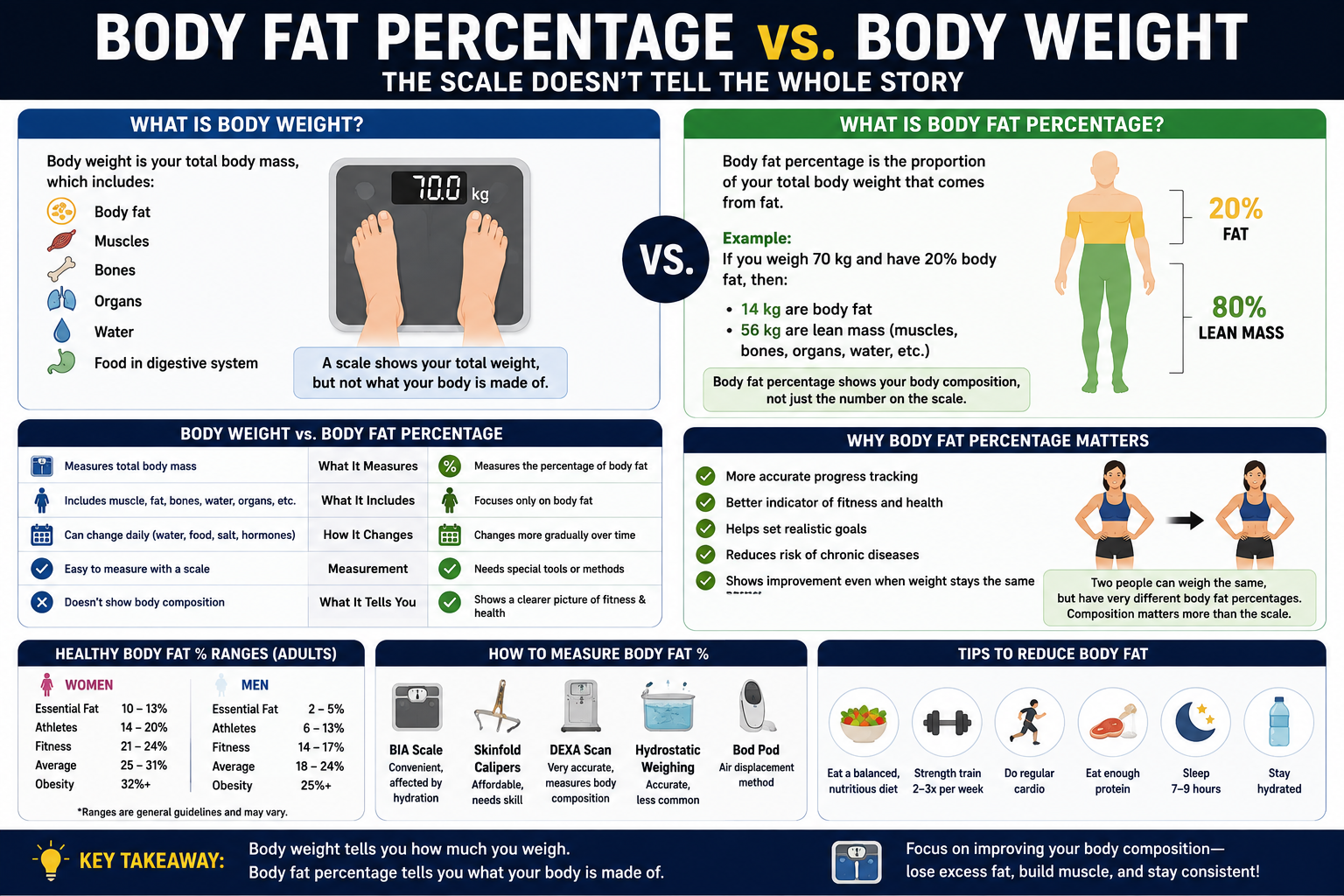
Body weight is the total weight of your body, including:
- Body fat
- Muscles
- Bones
- Organs
- Water
- Food in your digestive system
A standard bathroom scale measures only your total weight. It cannot distinguish between fat, muscle, or water.
What Is Body Fat Percentage?
Body fat percentage is the proportion of your total body weight that comes from fat.
For example, if you weigh 80 kg (176 lb) and have 20% body fat, then about 16 kg (35 lb) of your weight is body fat, while the remaining 64 kg (141 lb) consists of muscle, bones, organs, and other lean tissues.
Body Weight vs. Body Fat Percentage
| Body Weight | Body Fat Percentage |
|---|---|
| Measures total body mass | Measures the percentage of body fat |
| Includes muscle, water, bones, and organs | Focuses only on body fat |
| Can change daily due to hydration or food intake | Changes more gradually |
| Easy to measure with a scale | Requires specialized tools or estimates |
| Doesn’t show body composition | Gives a clearer picture of fitness progress |
Why Body Fat Percentage Matters
1. More Accurate Progress Tracking
During weight loss, you may lose fat while gaining muscle. Your body weight might stay the same, but your body composition improves.
2. Better Indicator of Fitness
Two people can weigh the same but have very different body fat percentages. The person with more muscle and less body fat is generally leaner and stronger.
3. Helps Set Realistic Goals
Instead of focusing only on losing weight, aim to reduce body fat while maintaining or increasing lean muscle mass.
4. Supports Better Health
Maintaining a healthy body fat percentage may reduce the risk of conditions such as:
- Heart disease
- Type 2 diabetes
- High blood pressure
- Metabolic syndrome
Healthy Body Fat Percentage Ranges
The following are general guidelines for adults:
Women
| Category | Body Fat % |
|---|---|
| Essential fat | 10–13% |
| Athletes | 14–20% |
| Fitness | 21–24% |
| Average | 25–31% |
| Obesity | 32% or higher |
Men
| Category | Body Fat % |
|---|---|
| Essential fat | 2–5% |
| Athletes | 6–13% |
| Fitness | 14–17% |
| Average | 18–24% |
| Obesity | 25% or higher |
These ranges are general references and may vary slightly between organizations.
How to Measure Body Fat Percentage
Several methods can estimate body fat:
- Bioelectrical impedance scales (BIA): Convenient but affected by hydration.
- Skinfold calipers: Affordable when used by a trained person.
- DEXA scan: Highly accurate and measures body composition.
- Hydrostatic weighing: Accurate but less widely available.
- Air displacement plethysmography (Bod Pod): Uses air displacement to estimate body composition.
Factors That Affect Body Weight
Daily body weight can change because of:
- Water retention
- Salt intake
- Carbohydrate intake
- Meal timing
- Hormonal changes
- Exercise
- Digestive contents
These short-term fluctuations do not necessarily reflect changes in body fat.
Tips to Reduce Body Fat
- Eat a balanced diet with plenty of vegetables, fruits, lean proteins, whole grains, and healthy fats.
- Maintain a moderate calorie deficit if your goal is weight loss.
- Perform strength training at least 2–3 times per week.
- Include regular cardio exercise.
- Eat enough protein to help preserve muscle during weight loss.
- Sleep 7–9 hours each night.
- Stay hydrated.
- Be consistent with healthy habits rather than relying on quick fixes.
Common Mistakes to Avoid
- Judging progress only by the scale.
- Following extreme diets that cause muscle loss.
- Ignoring strength training.
- Comparing your body to others.
- Expecting body fat percentage to change overnight.
Which Is More Important?
Both body weight and body fat percentage are useful, but body fat percentage provides a better understanding of overall body composition and fitness progress. Body weight is still valuable for tracking trends, but it should be considered alongside measurements such as waist circumference, strength gains, how your clothes fit, and your overall health.
Final Thoughts
Body weight tells you how much you weigh, while body fat percentage tells you what your body is made of. Focusing on improving body composition reducing excess body fat while preserving or building muscle is often a more meaningful goal than simply lowering the number on the scale. By combining healthy eating, regular exercise, strength training, and consistent lifestyle habits, you can achieve lasting improvements in both your health and fitness.