Low-Carb vs. Low-Fat Diets: Which Is Better for Weight Loss?
Choosing between a low-carb and a low-fat diet is one of the most common questions for people trying to lose weight. Both approaches can be effective, but the best choice depends on your health goals, lifestyle, food preferences, and ability to stick with the plan long term.
What Is a Low-Carb Diet?
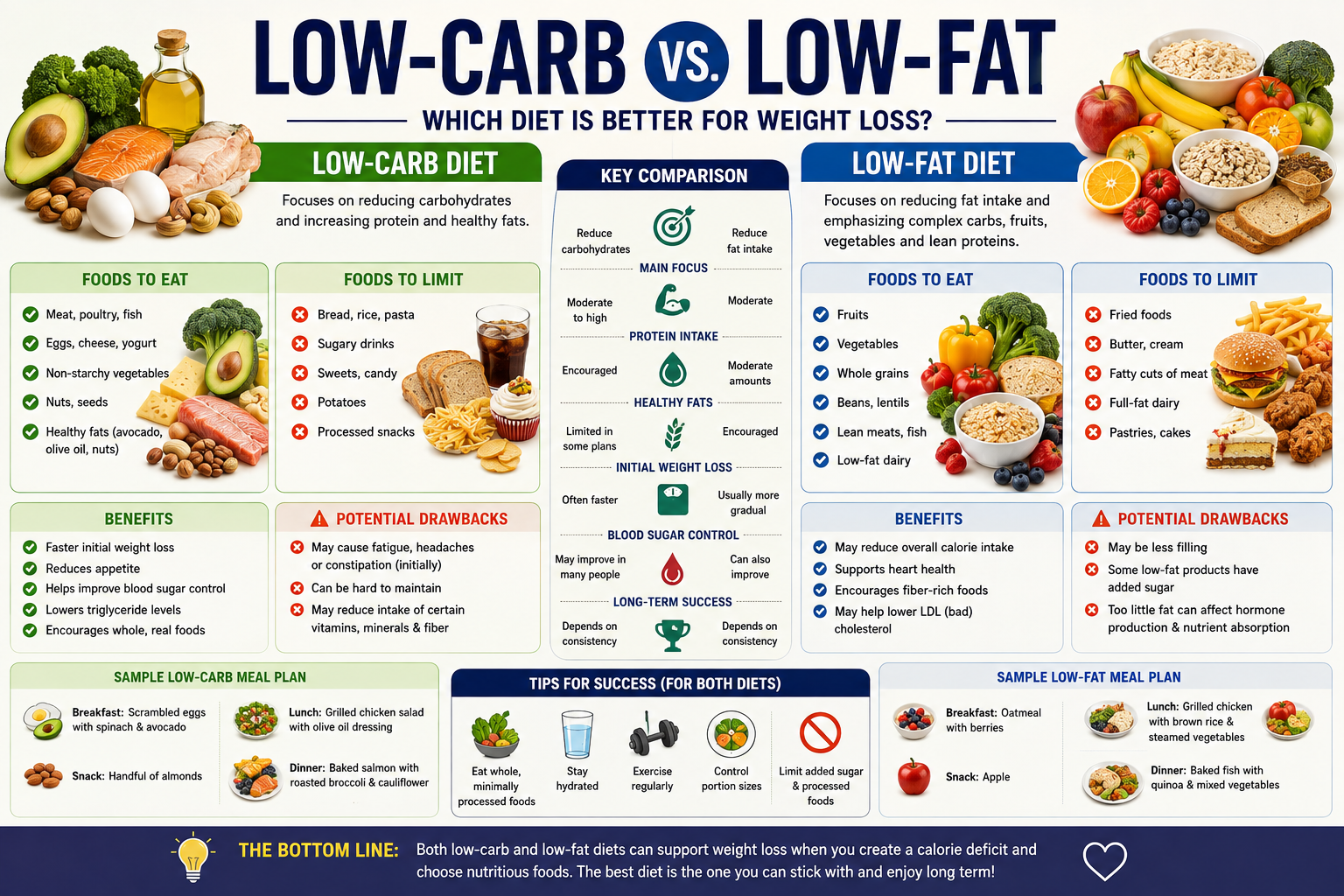
A low-carb diet limits foods high in carbohydrates, such as bread, rice, pasta, sugary drinks, and sweets. Instead, it emphasizes protein, healthy fats, and non-starchy vegetables.
Foods to Eat
- Lean meat and poultry
- Fish and seafood
- Eggs
- Cheese and plain yogurt
- Leafy green vegetables
- Broccoli, cauliflower, zucchini
- Nuts and seeds
- Avocados
- Olive oil
Foods to Limit
- White bread
- Rice
- Pasta
- Sugary drinks
- Candy and desserts
- Cakes and pastries
- Potatoes
- Highly processed snacks
Benefits of a Low-Carb Diet
- May lead to faster initial weight loss due to reduced water retention.
- Can help reduce appetite, making it easier to eat fewer calories.
- May improve blood sugar control in some people.
- Can lower triglyceride levels.
- Encourages eating more whole, minimally processed foods.
Potential Drawbacks
- May be difficult to maintain for some people.
- Can cause fatigue, headaches, or constipation during the first few days if fiber and fluids are inadequate.
- Restricting healthy carbohydrate sources too much may reduce intake of certain vitamins, minerals, and fiber.
What Is a Low-Fat Diet?
A low-fat diet reduces foods high in fat while emphasizing fruits, vegetables, whole grains, lean proteins, and legumes.
Foods to Eat
- Fruits
- Vegetables
- Whole grains
- Beans and lentils
- Skinless chicken
- Fish
- Low-fat dairy
- Egg whites
Foods to Limit
- Fried foods
- Butter
- Cream
- Fatty cuts of meat
- Full-fat dairy products
- Pastries
- Processed snacks high in saturated fat
Benefits of a Low-Fat Diet
- May reduce calorie intake when high-fat processed foods are replaced with nutrient-rich options.
- Can support heart health when saturated fats are reduced.
- Encourages eating plenty of fruits, vegetables, and whole grains.
- May help lower LDL (“bad”) cholesterol.
Potential Drawbacks
- Very low-fat diets may leave some people feeling less satisfied after meals.
- Some reduced-fat products contain added sugars to improve taste.
- Healthy fats are important for hormone production and absorption of vitamins A, D, E, and K.
Low-Carb vs. Low-Fat: Comparison
| Feature | Low-Carb Diet | Low-Fat Diet |
|---|---|---|
| Main focus | Reduce carbohydrates | Reduce fat intake |
| Protein intake | Usually higher | Moderate |
| Healthy fats | Encouraged | Moderate amounts |
| Whole grains | Limited in some plans | Encouraged |
| Initial weight loss | Often faster | Usually more gradual |
| Blood sugar control | May improve in many people | Can also improve when based on whole foods |
| Long-term success | Depends on consistency | Depends on consistency |
Which Diet Is Better for Weight Loss?
Research suggests that both low-carb and low-fat diets can lead to weight loss when they create a calorie deficit and include nutritious foods. The diet that works best is usually the one you can follow consistently while meeting your nutritional needs.
Tips for Success
- Focus on whole, minimally processed foods.
- Eat plenty of vegetables.
- Include lean protein with each meal.
- Choose healthy fats such as olive oil, nuts, seeds, and avocados in appropriate portions.
- Stay hydrated.
- Exercise regularly with a mix of cardio and strength training.
- Avoid sugary drinks and highly processed snacks.
Sample Low-Carb Meal Plan
Breakfast: Scrambled eggs with spinach and avocado
Snack: Handful of almonds
Lunch: Grilled chicken salad with olive oil dressing
Snack: Greek yogurt
Dinner: Baked salmon with roasted broccoli and cauliflower
Sample Low-Fat Meal Plan
Breakfast: Oatmeal with fresh berries
Snack: Apple
Lunch: Grilled chicken with brown rice and steamed vegetables
Snack: Low-fat yogurt
Dinner: Baked fish with quinoa and mixed vegetables
Common Mistakes to Avoid
- Choosing processed “low-fat” foods high in added sugar.
- Eliminating all healthy fats.
- Cutting carbohydrates without eating enough fiber-rich vegetables.
- Ignoring portion sizes.
- Following overly restrictive diets that are difficult to maintain.
- Expecting rapid, long-term results from short-term diet changes.
Final Thoughts
Both low-carb and low-fat diets can support healthy weight loss when they emphasize nutrient-dense foods and fit your lifestyle. Rather than focusing on one diet as universally “better,” aim for a balanced eating pattern that includes vegetables, lean protein, healthy fats, and high-fiber foods while limiting added sugars and highly processed foods. The most effective diet is one you can enjoy, maintain, and combine with regular physical activity for long-term health.