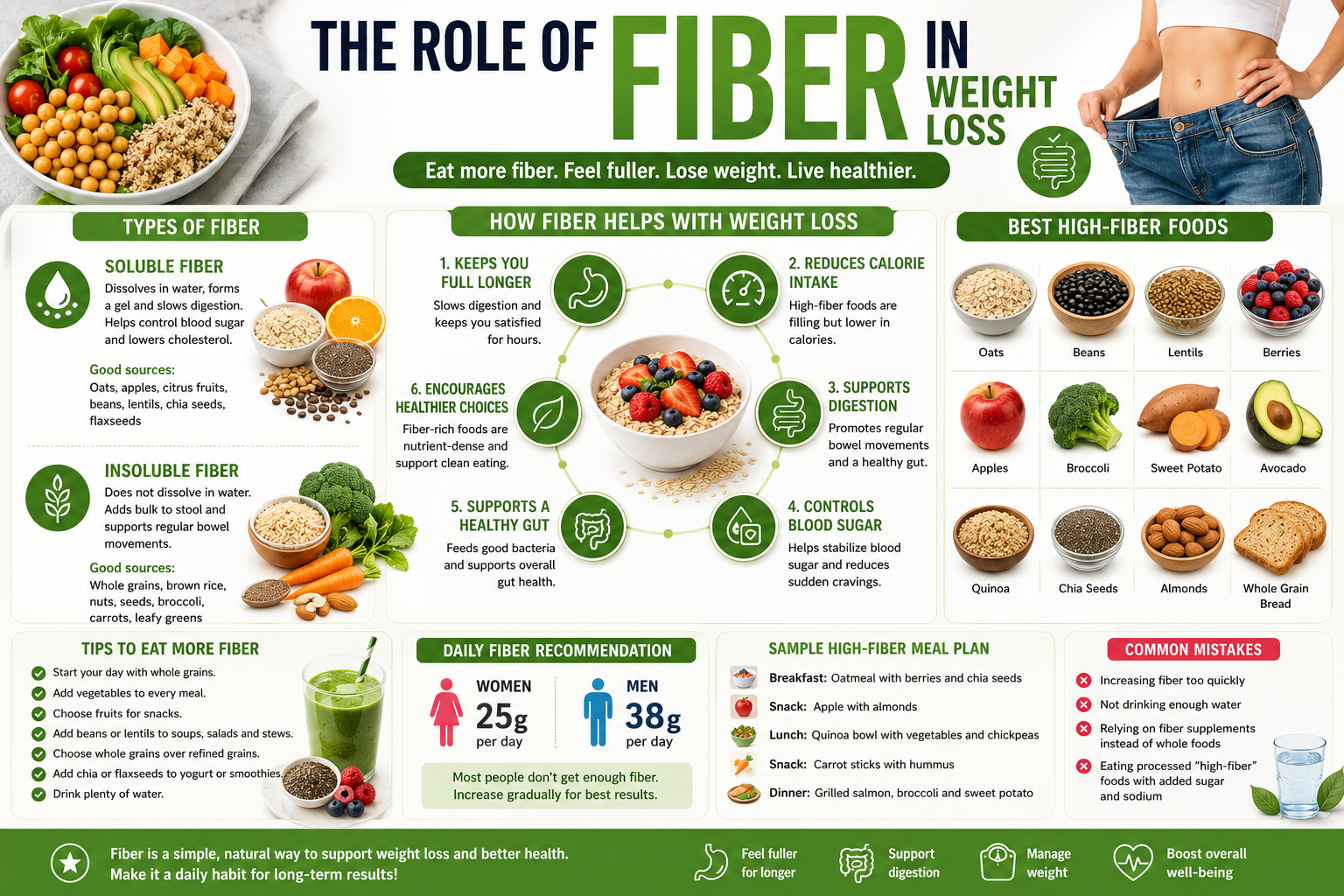
The Role of Fiber in Weight Loss
Fiber is an essential nutrient found in plant-based foods that plays a key role in healthy digestion, appetite control, and weight management. Unlike other carbohydrates, fiber is not fully digested by the body, helping you feel full for longer while supporting overall health. Including more fiber-rich foods in your daily diet can make weight loss easier and more sustainable.
What Is Fiber?
Dietary fiber is a type of carbohydrate that passes through the digestive system without being completely broken down. There are two main types:
Soluble Fiber
Soluble fiber dissolves in water to form a gel-like substance. It helps slow digestion, stabilize blood sugar levels, and reduce cholesterol.
Good sources include:
- Oats
- Apples
- Citrus fruits
- Beans
- Lentils
- Chia seeds
- Flaxseeds
Insoluble Fiber
Insoluble fiber does not dissolve in water. It adds bulk to stool and supports regular bowel movements.
Good sources include:
- Whole grains
- Brown rice
- Nuts
- Seeds
- Broccoli
- Carrots
- Leafy green vegetables
How Fiber Helps with Weight Loss
1. Keeps You Full Longer
Fiber slows the movement of food through your digestive system, helping you stay satisfied after meals and reducing the urge to snack.
2. Reduces Overall Calorie Intake
High-fiber foods are often filling but lower in calories, making it easier to eat less without feeling deprived.
3. Supports Healthy Digestion
Fiber promotes regular bowel movements and helps maintain a healthy digestive system.
4. Helps Control Blood Sugar
Soluble fiber slows the absorption of sugar into the bloodstream, reducing blood sugar spikes and helping manage hunger.
5. Encourages Healthier Food Choices
Fiber-rich foods such as fruits, vegetables, whole grains, and legumes are naturally rich in vitamins, minerals, and antioxidants.
6. Supports a Healthy Gut Microbiome
Fiber feeds beneficial gut bacteria, which produce compounds that support digestion, reduce inflammation, and may influence appetite regulation.
Best High-Fiber Foods for Weight Loss
- Oats
- Apples
- Pears
- Berries
- Avocados
- Broccoli
- Spinach
- Carrots
- Sweet potatoes
- Brown rice
- Quinoa
- Whole wheat bread
- Chickpeas
- Black beans
- Lentils
- Chia seeds
- Flaxseeds
- Almonds
Daily Fiber Recommendations
Most adults should aim for approximately:
- Women: 25 grams per day
- Men: 38 grams per day
Many people consume less than these amounts, so increasing fiber gradually can help your digestive system adjust.
Tips to Eat More Fiber
- Start your day with oatmeal or whole-grain cereal.
- Include vegetables with lunch and dinner.
- Snack on fruit instead of sugary treats.
- Add beans or lentils to soups, salads, and stews.
- Choose whole-grain bread, pasta, and rice instead of refined grains.
- Sprinkle chia or flaxseeds onto yogurt or smoothies.
- Drink plenty of water, especially when increasing fiber intake.
Sample High-Fiber Meal Plan
Breakfast: Oatmeal topped with berries and chia seeds
Snack: Apple with a handful of almonds
Lunch: Grilled chicken, quinoa, and mixed vegetables
Snack: Carrot sticks with hummus
Dinner: Baked salmon, broccoli, sweet potato, and a side salad
Common Mistakes to Avoid
- Increasing fiber too quickly, which may cause gas or bloating.
- Not drinking enough water while eating more fiber.
- Relying on fiber supplements instead of whole foods unless advised by a healthcare professional.
- Assuming all processed foods labeled “high fiber” are healthy—check for added sugars and excess sodium.
Key Takeaways
- Fiber supports weight loss by increasing fullness, reducing calorie intake, and improving digestion.
- Choose a variety of fiber-rich whole foods, including fruits, vegetables, legumes, whole grains, nuts, and seeds.
- Increase fiber gradually and stay well hydrated.
- Combine a high-fiber diet with regular physical activity and balanced nutrition for the best long-term weight-loss results.


