How Stress Affects Body Weight
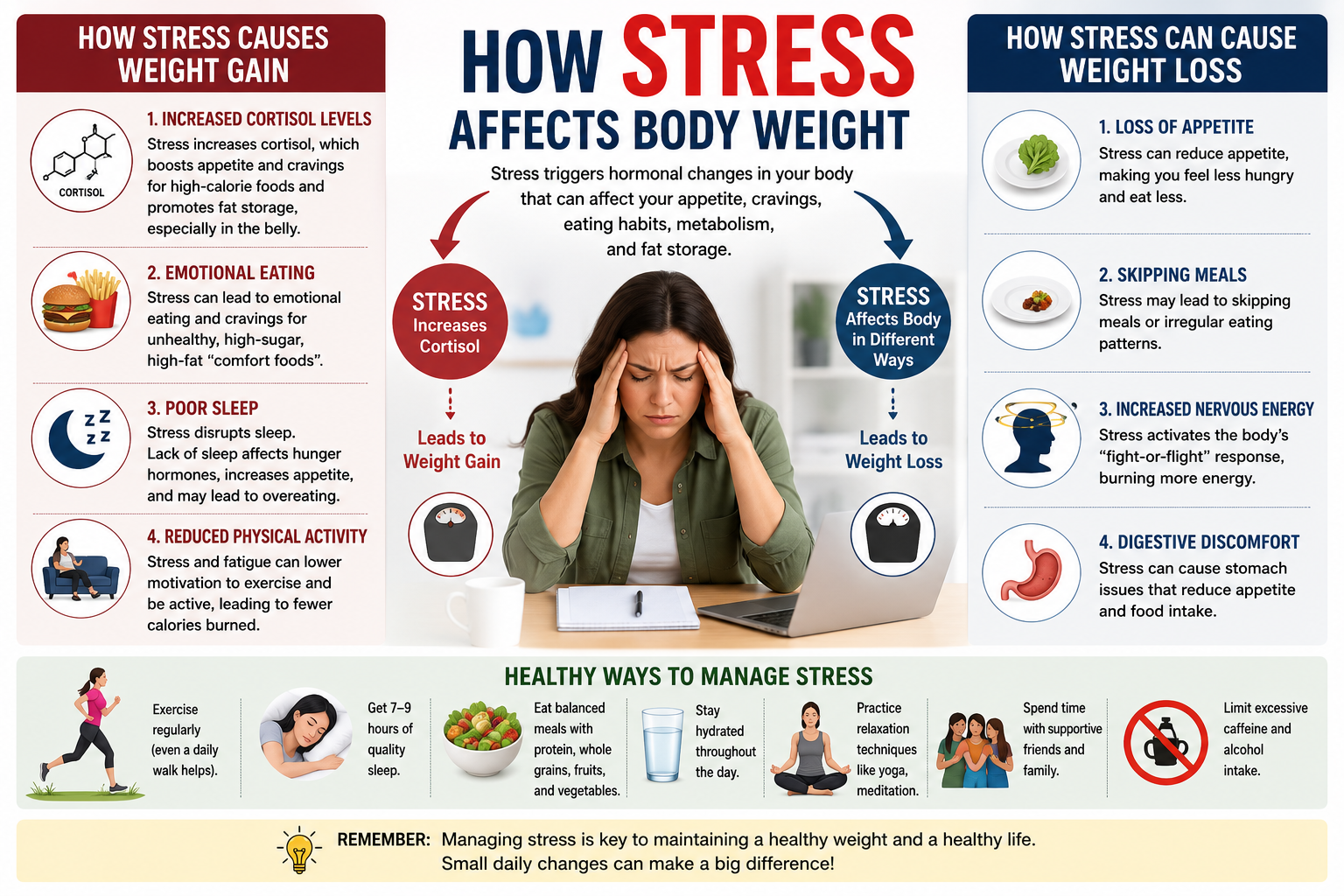
Stress is a natural response to challenging situations, but when it becomes chronic, it can have a significant impact on your body weight. Some people gain weight during stressful periods, while others lose weight. Understanding how stress affects your body can help you make healthier choices and better manage your weight.
How Stress Causes Weight Gain
1. Increased Cortisol Levels
When you’re stressed, your body releases a hormone called cortisol. Elevated cortisol levels can increase appetite, encourage cravings for high-calorie foods, and promote fat storage, especially around the abdomen.
2. Emotional Eating
Many people cope with stress by eating comfort foods that are high in sugar, fat, and calories. This emotional eating can lead to consuming more calories than your body needs.
3. Poor Sleep
Stress often disrupts sleep. Lack of sleep can affect hunger hormones, making you feel hungrier and less satisfied after meals, which may contribute to overeating.
4. Reduced Physical Activity
Stress can leave you feeling mentally and physically exhausted, making it harder to stay active. Less movement means fewer calories burned throughout the day.
How Stress Can Cause Weight Loss
Not everyone gains weight under stress. Some people experience:
- Loss of appetite
- Skipping meals
- Increased nervous energy
- Digestive discomfort that reduces food intake
These factors can lead to temporary weight loss, though chronic stress-related weight loss may affect overall health if it continues.
Signs That Stress Is Affecting Your Weight
- Frequent cravings for sugary or salty foods
- Eating when you’re not physically hungry
- Unexplained weight gain or weight loss
- Difficulty sleeping
- Low energy and lack of motivation
- Increased belly fat over time
Healthy Ways to Manage Stress
- Exercise regularly, even if it’s just a daily walk.
- Aim for 7–9 hours of quality sleep each night.
- Eat balanced meals with protein, whole grains, fruits, and vegetables.
- Stay hydrated throughout the day.
- Practice relaxation techniques such as deep breathing, meditation, or yoga.
- Spend time with supportive friends and family.
- Limit excessive caffeine and alcohol intake.
- Seek professional help if stress becomes overwhelming or persistent.
Tips to Prevent Stress-Related Weight Gain
- Plan healthy snacks in advance.
- Avoid skipping meals.
- Keep unhealthy foods out of easy reach.
- Stay active every day.
- Practice mindful eating by paying attention to hunger and fullness cues.
- Create a regular sleep schedule.