How to Avoid Overeating
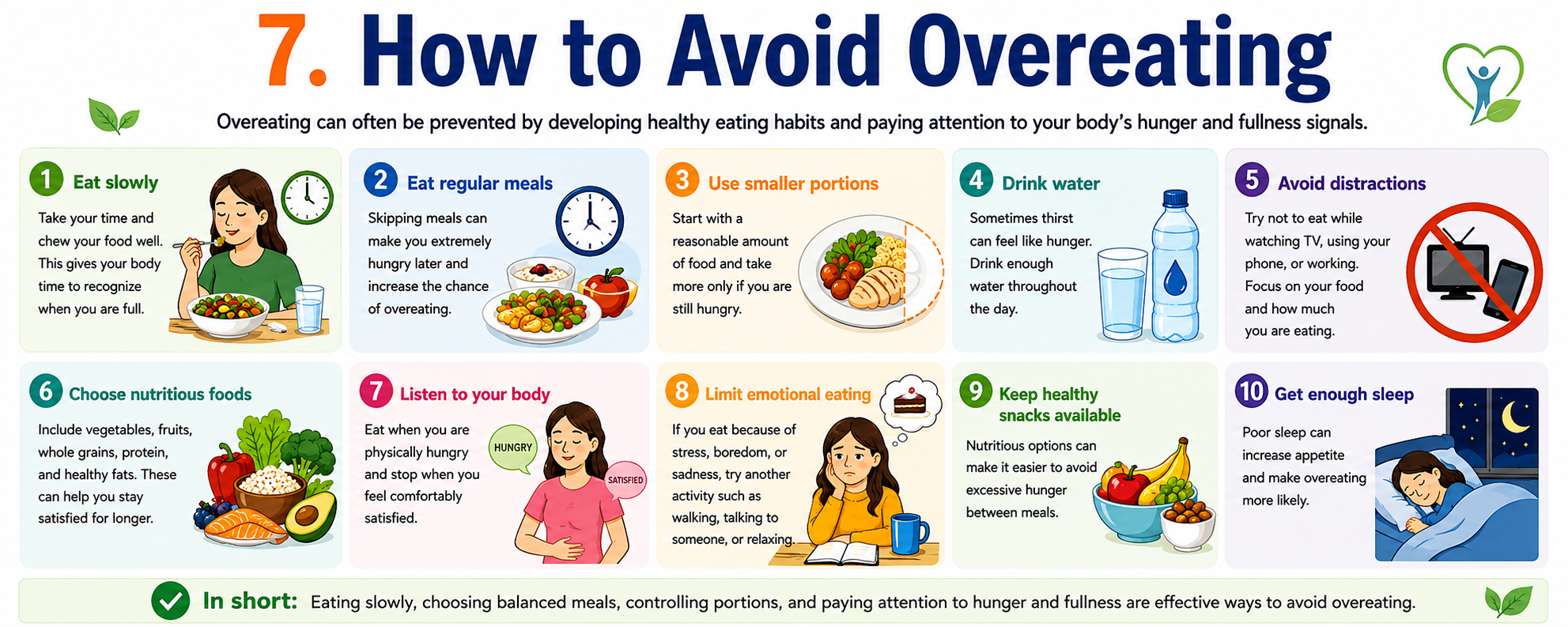
Overeating can often be prevented by developing healthy eating habits and paying attention to your body’s hunger and fullness signals.
- Eat slowly: Take your time and chew your food well. This gives your body time to recognize when you are full.
- Eat regular meals: Skipping meals can make you extremely hungry later and increase the chance of overeating.
- Use smaller portions: Start with a reasonable amount of food and take more only if you are still hungry.
- Drink water: Sometimes thirst can feel like hunger. Drink enough water throughout the day.
- Avoid distractions: Try not to eat while watching TV, using your phone, or working. Focus on your food and how much you are eating.
- Choose nutritious foods: Include vegetables, fruits, whole grains, protein, and healthy fats. These can help you stay satisfied for longer.
- Listen to your body: Eat when you are physically hungry and stop when you feel comfortably satisfied.
- Limit emotional eating: If you eat because of stress, boredom, or sadness, try another activity such as walking, talking to someone, or relaxing.
- Keep healthy snacks available: Nutritious options can make it easier to avoid excessive hunger between meals.
- Get enough sleep: Poor sleep can increase appetite and make overeating more likely.