How Sleep Affects Weight Loss
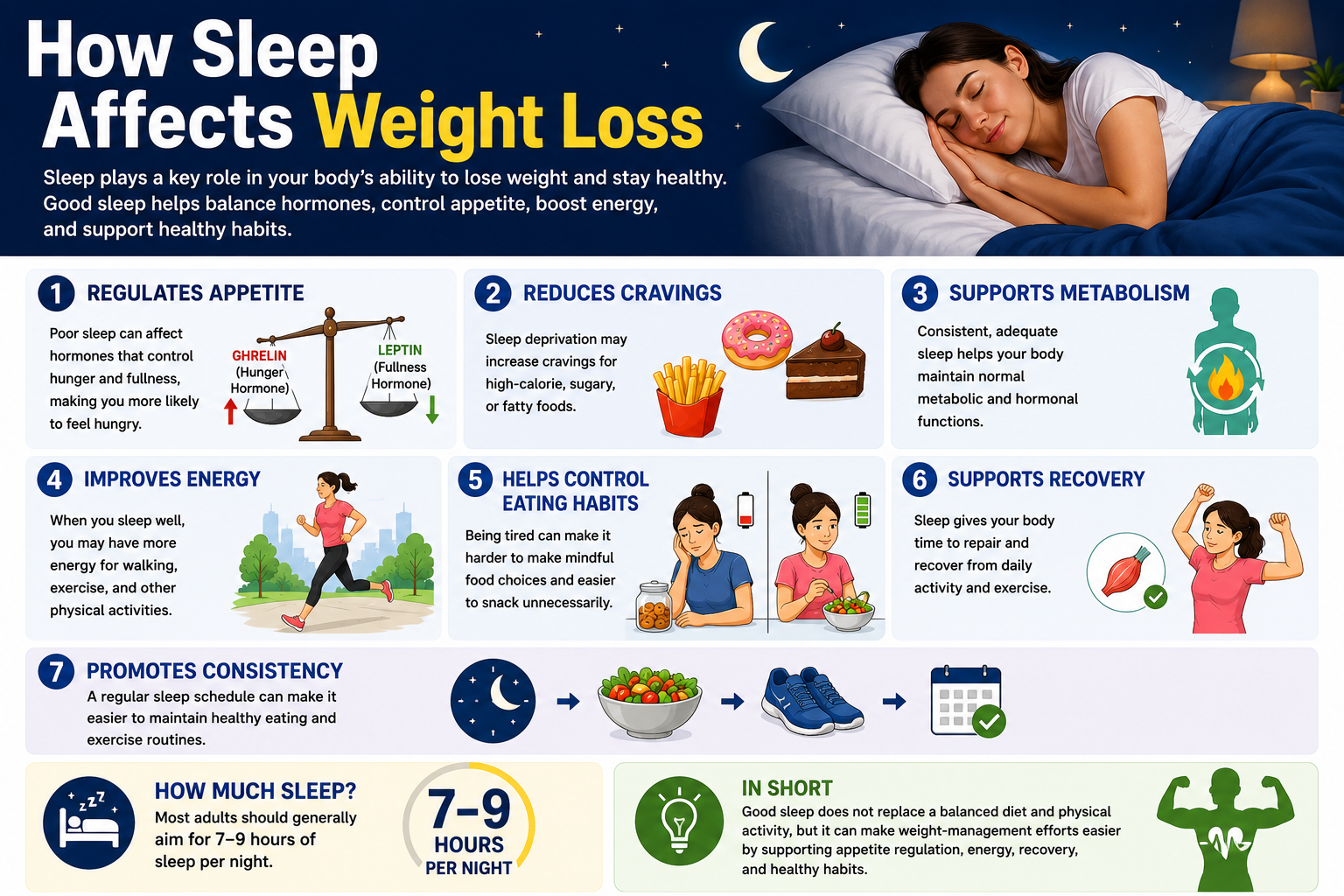
Sleep plays an important role in healthy weight management. Getting enough quality sleep can support appetite control, energy levels, and healthy lifestyle habits.
- Regulates appetite: Poor sleep can affect hormones that control hunger and fullness, making you more likely to feel hungry.
- Reduces cravings: Sleep deprivation may increase cravings for high-calorie, sugary, or fatty foods.
- Supports metabolism: Consistent, adequate sleep helps your body maintain normal metabolic and hormonal functions.
- Improves energy: When you sleep well, you may have more energy for walking, exercise, and other physical activities.
- Helps control eating habits: Being tired can make it harder to make mindful food choices and easier to snack unnecessarily.
- Supports recovery: Sleep gives your body time to recover from daily activity and exercise.
- Promotes consistency: A regular sleep schedule can make it easier to maintain healthy eating and exercise routines.
How much sleep? Most adults should generally aim for 7–9 hours of sleep per night.
Good sleep does not replace a balanced diet and physical activity, but it can make weight-management efforts easier by supporting appetite regulation, energy, recovery, and healthy habits.