Tracking Food Intake
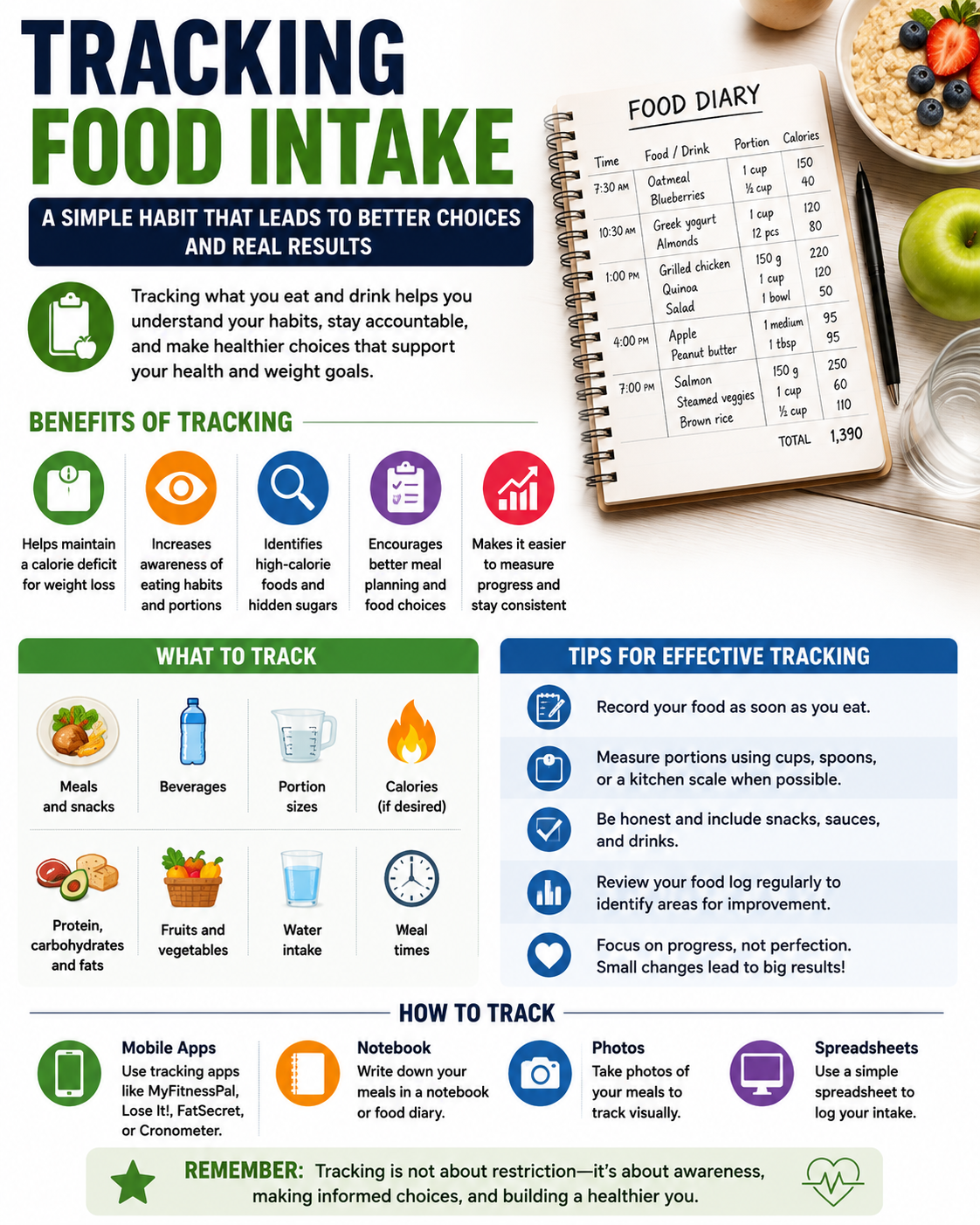
Tracking food intake means recording everything you eat and drink each day. It helps you understand your eating habits, monitor calorie intake, and make healthier food choices. Keeping a food diary can increase awareness of portion sizes, identify patterns such as emotional or late-night eating, and support long-term weight management.
Benefits of Tracking Food Intake
- Helps maintain a calorie deficit for weight loss.
- Increases awareness of eating habits and portion sizes.
- Identifies high-calorie foods and sugary snacks.
- Encourages healthier meal planning.
- Monitors protein, fiber, and water intake.
- Improves accountability and consistency.
- Makes it easier to measure progress and adjust your diet.
What to Track
- Meals and snacks
- Beverages
- Portion sizes
- Calories (if desired)
- Protein, carbohydrates, and fats
- Fruits and vegetables
- Water intake
- Meal times
Tips for Effective Food Tracking
- Record your food as soon as you eat.
- Measure portions using cups, spoons, or a kitchen scale when possible.
- Be honest and include snacks, sauces, and drinks.
- Review your food log regularly to identify areas for improvement.
- Focus on building healthy habits rather than aiming for perfection.
Tracking your food intake does not mean restricting yourself it is a tool to help you make informed choices, stay consistent with your health goals, and develop a balanced, sustainable eating pattern over time.