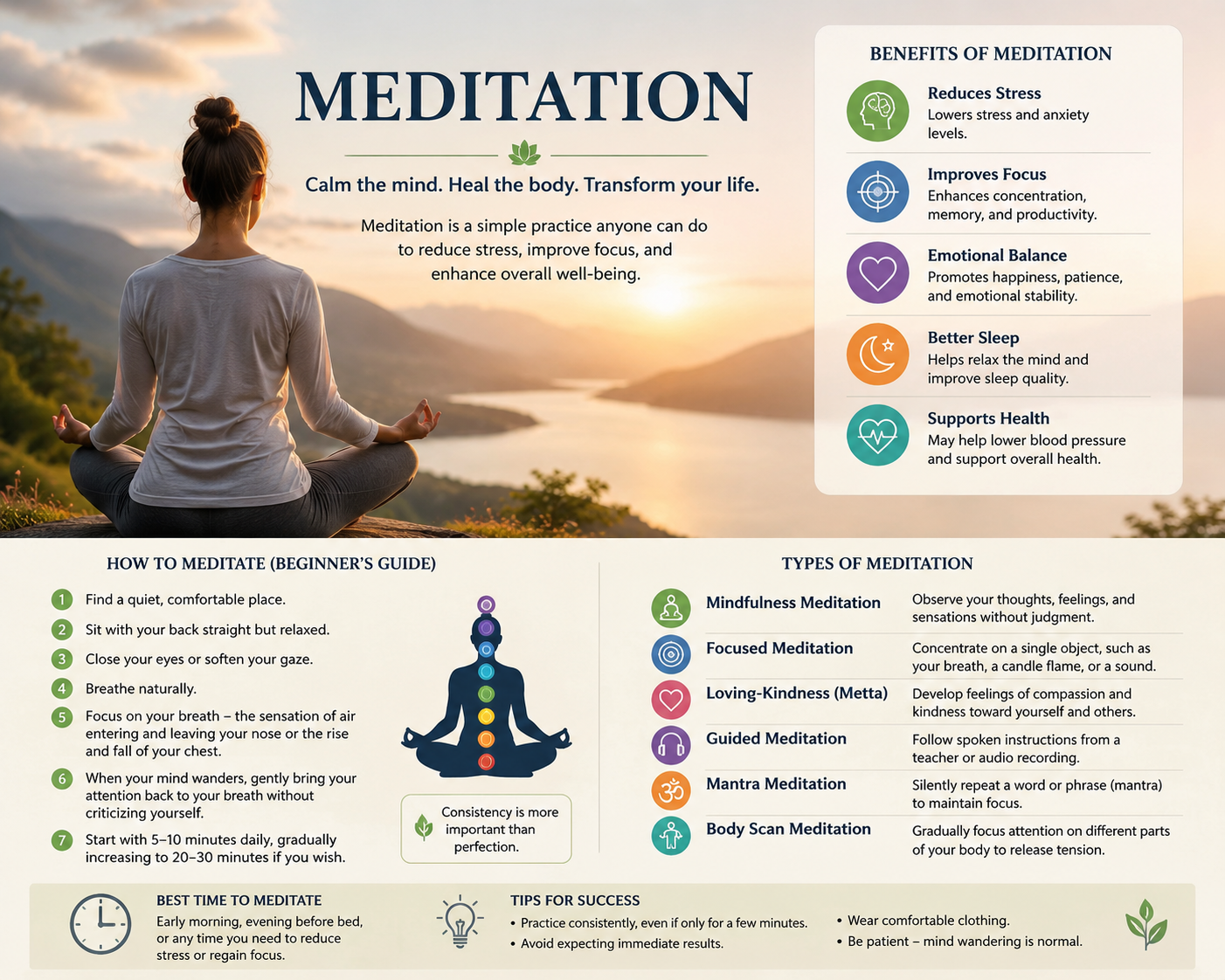
Meditation is a mental practice that trains your attention and awareness. It helps calm the mind, improve focus, reduce stress, and enhance emotional well-being.
Types of Meditation
- Mindfulness Meditation: Observe your thoughts, feelings, and sensations without judging them.
- Focused Meditation: Concentrate on a single object, such as your breath, a candle flame, or a sound.
- Loving-Kindness (Metta): Develop feelings of compassion and kindness toward yourself and others.
- Guided Meditation: Follow spoken instructions from a teacher or audio recording.
- Mantra Meditation: Silently repeat a word or phrase (mantra) to maintain focus.
- Body Scan Meditation: Gradually focus attention on different parts of your body to release tension.
Benefits
- Reduces stress and anxiety
- Improves concentration and memory
- Promotes emotional balance
- Enhances sleep quality
- Lowers blood pressure in some people
- Increases self-awareness and patience
How to Meditate (Beginner’s Guide)
- Find a quiet, comfortable place.
- Sit with your back straight but relaxed.
- Close your eyes or soften your gaze.
- Breathe naturally.
- Focus on your breath—the sensation of air entering and leaving your nose or the rise and fall of your chest.
- When your mind wanders, gently bring your attention back to your breath without criticizing yourself.
- Start with 5–10 minutes daily, gradually increasing to 20–30 minutes if you wish.
Best Time to Meditate
- Early morning to start the day with clarity.
- Evening to relax before bed.
- Any time you need to reduce stress or regain focus.
Tips for Success
- Practice consistently, even if only for a few minutes.
- Avoid expecting immediate results.
- Wear comfortable clothing.
- Be patient—mind wandering is normal.
Regular meditation can improve both mental and physical health over time. Even a few minutes of daily practice can make a noticeable difference in your overall well-being.