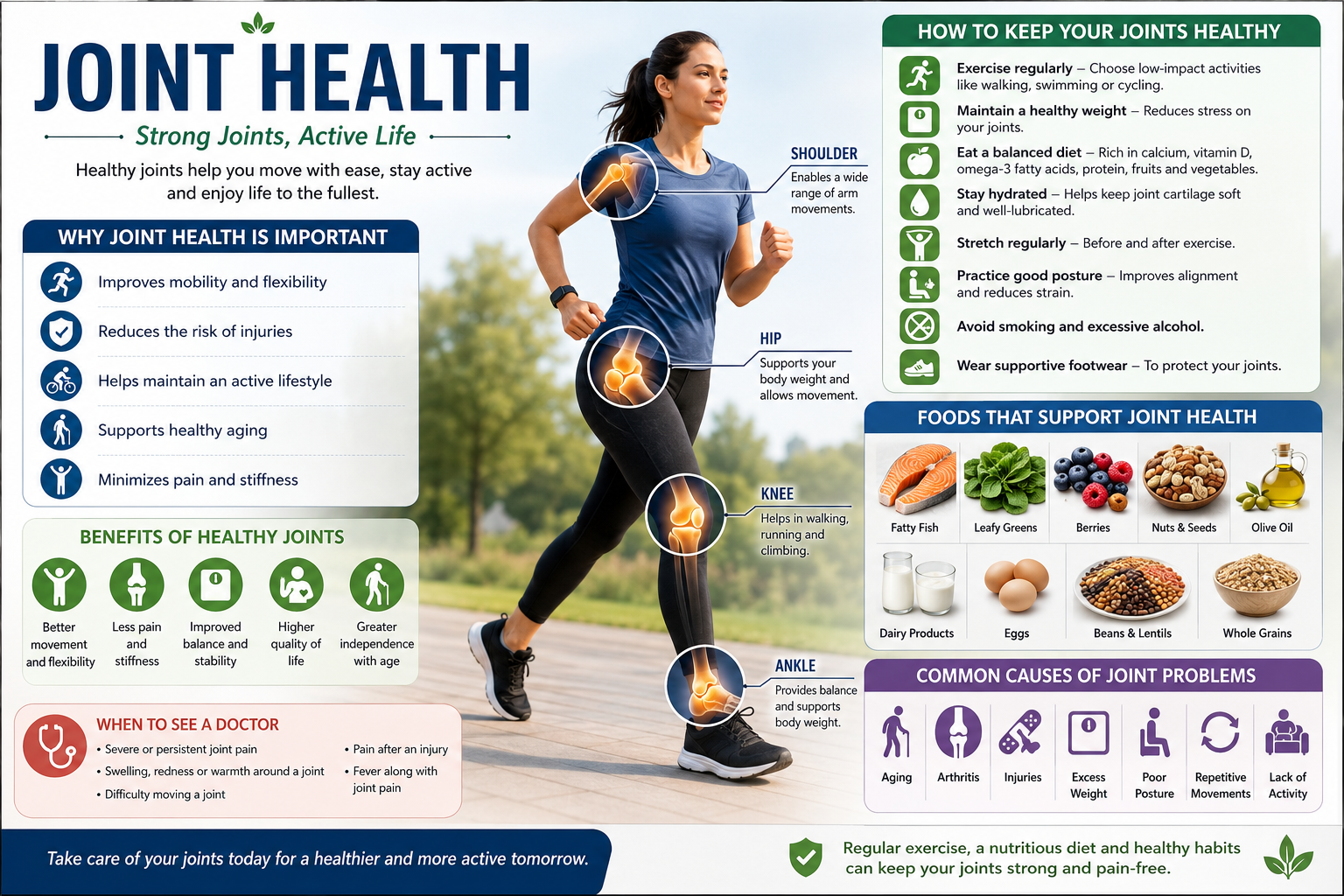
Joint Health
Joint health refers to keeping the body’s joints healthy, flexible, and pain-free. Joints are where two or more bones meet, allowing movement for activities such as walking, running, bending, and lifting.
Why Joint Health Is Important
Healthy joints:
- Improve mobility and flexibility
- Reduce the risk of injuries
- Help maintain an active lifestyle
- Support healthy aging
- Minimize pain and stiffness
Common Causes of Joint Problems
- Aging
- Arthritis (such as osteoarthritis and rheumatoid arthritis)
- Injuries or accidents
- Excess body weight
- Poor posture
- Repetitive movements
- Lack of physical activity
Signs of Unhealthy Joints
- Joint pain
- Swelling
- Stiffness
- Reduced range of motion
- Clicking or grinding sensations
- Weakness around the joint
How to Keep Your Joints Healthy
- Exercise regularly with low-impact activities like walking, swimming, or cycling.
- Maintain a healthy weight to reduce stress on your joints.
- Eat a balanced diet rich in:
- Calcium
- Vitamin D
- Omega-3 fatty acids
- Protein
- Fruits and vegetables
- Stay hydrated to support joint lubrication.
- Stretch before and after exercise.
- Practice good posture.
- Avoid smoking and excessive alcohol consumption.
- Wear supportive footwear during physical activities.
Foods That Support Joint Health
- Fatty fish (salmon, sardines, mackerel)
- Leafy green vegetables
- Berries
- Nuts and seeds
- Olive oil
- Dairy products
- Eggs
- Beans and lentils
- Whole grains
Benefits of Healthy Joints
- Better movement and flexibility
- Less pain and stiffness
- Improved balance and stability
- Higher quality of life
- Greater independence with age
When to See a Doctor
Seek medical advice if you have:
- Severe or persistent joint pain
- Swelling lasting several days
- Redness or warmth around a joint
- Difficulty moving a joint
- Pain after an injury
- Fever along with joint pain
Taking care of your joints through regular exercise, a nutritious diet, healthy weight management, and proper body mechanics can help keep them strong and mobile throughout life. If joint pain is persistent or worsening, consult a healthcare professional for evaluation and treatment.


One response to “Joint Health”
Good