Healthy Weight Loss vs. Crash Dieting: Which Is Better?
Losing weight is a common health goal, but how you lose weight matters just as much as how much you lose. While crash diets may promise quick results, healthy weight loss focuses on long-term success and overall well-being. Understanding the differences can help you make better choices for your health.
What Is Healthy Weight Loss?
Healthy weight loss is the gradual reduction of body weight through balanced eating, regular physical activity, and sustainable lifestyle changes. Most health experts recommend losing 0.5–1 kg (1–2 pounds) per week.
Characteristics of Healthy Weight Loss
- Balanced, nutrient-rich meals
- Moderate calorie deficit
- Regular exercise (cardio and strength training)
- Adequate sleep (7–9 hours)
- Proper hydration
- Long-term lifestyle changes
Benefits
- Preserves muscle mass
- Improves heart health
- Boosts energy levels
- Reduces the risk of chronic diseases
- Easier to maintain over time
- Better mental and emotional well-being
What Is Crash Dieting?
Crash dieting involves severely restricting calories or eliminating entire food groups to lose weight quickly. Many crash diets promise dramatic results within days or weeks.
Common Examples
- Eating fewer than 800 calories per day
- Juice cleanses
- Detox diets
- Single-food diets
- Extreme fasting without medical supervision
Why People Choose Crash Diets
- Fast weight loss
- Upcoming events
- Social pressure
- Misleading marketing claims
Risks of Crash Dieting
Although crash diets may produce rapid weight loss initially, much of that weight is water and muscle rather than body fat.
Health Risks
- Nutrient deficiencies
- Muscle loss
- Fatigue and weakness
- Slower metabolism
- Gallstones
- Mood swings and irritability
- Increased risk of binge eating
- Weight regain (yo-yo dieting)
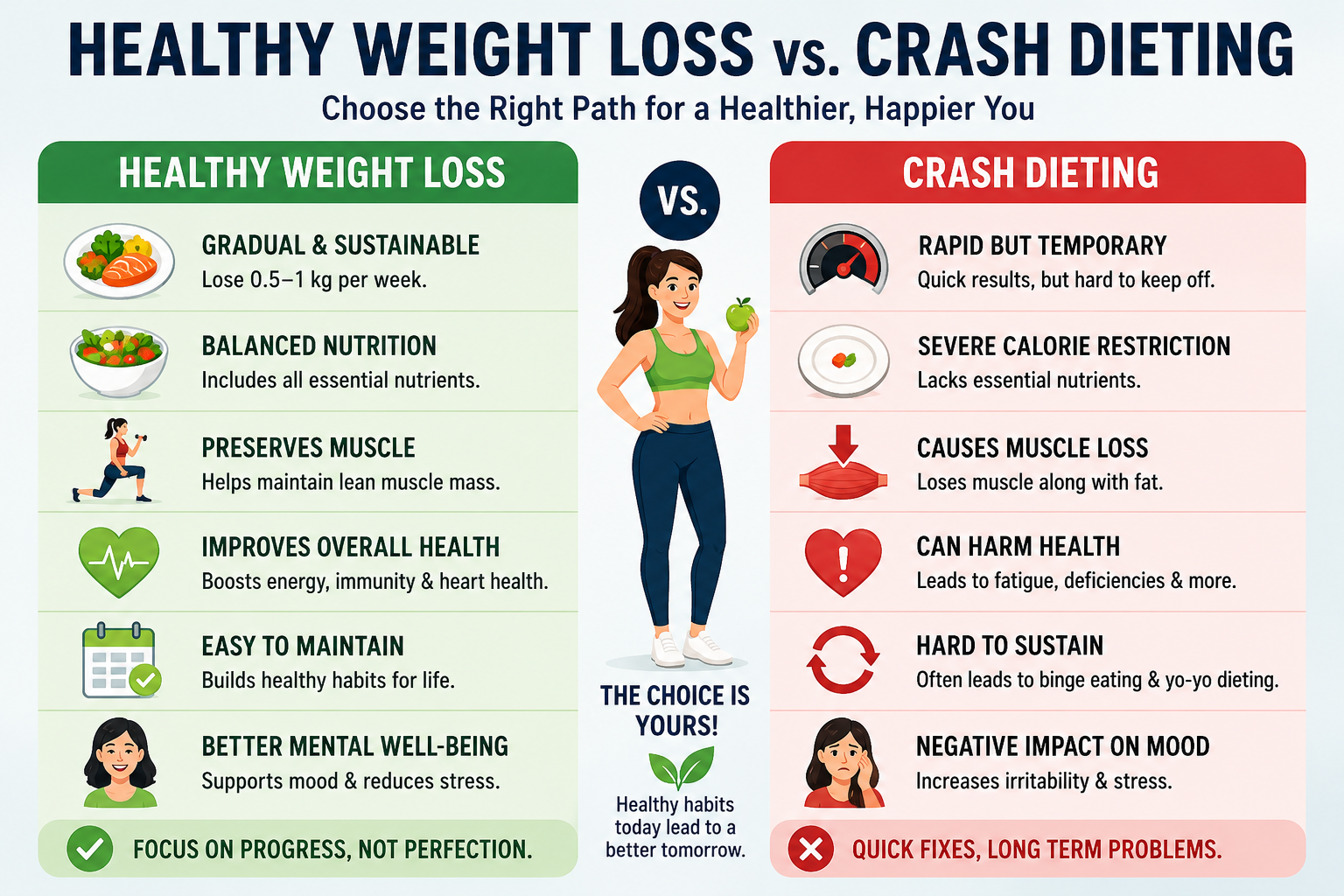
Healthy Weight Loss vs. Crash Dieting
| Healthy Weight Loss | Crash Dieting |
|---|---|
| Gradual and sustainable | Rapid but temporary |
| Balanced nutrition | Severe calorie restriction |
| Preserves muscle | Causes muscle loss |
| Improves overall health | Can harm physical and mental health |
| Easy to maintain | Difficult to sustain |
| Supports long-term habits | Often leads to weight regain |
Which Method Burns More Fat?
Healthy weight loss is more effective for reducing body fat while maintaining lean muscle. Crash dieting often causes loss of water weight and muscle, making it harder to maintain the results.
Tips for Healthy Weight Loss
1. Eat Balanced Meals
Include:
- Lean protein
- Whole grains
- Fruits
- Vegetables
- Healthy fats
2. Stay Active
Aim for:
- At least 150 minutes of moderate exercise each week
- Strength training 2–3 times weekly
3. Drink Plenty of Water
Water helps control appetite and supports metabolism.
4. Get Enough Sleep
Poor sleep can increase hunger hormones and make weight loss more difficult.
5. Be Patient
Sustainable weight loss takes time. Focus on creating healthy habits instead of chasing quick fixes.
Common Myths
Myth 1: Eating Less Always Means Losing More Weight
Fact: Eating too little can slow your metabolism and increase muscle loss.
Myth 2: Detox Diets Remove Toxins
Fact: Your liver and kidneys naturally remove toxins. Most detox diets lack scientific evidence.
Myth 3: Skipping Meals Helps Weight Loss
Fact: Skipping meals may lead to overeating later in the day.
Frequently Asked Questions
How much weight is safe to lose each week?
Most experts recommend 0.5–1 kg (1–2 pounds) per week.
Are crash diets ever recommended?
Very low-calorie diets may be prescribed by healthcare professionals for specific medical conditions, but they should only be followed under medical supervision.
Can I lose belly fat with a healthy diet?
Yes. A balanced diet combined with regular exercise can reduce overall body fat, including belly fat. Spot reduction is not possible.
Conclusion
Crash diets may seem attractive because they promise fast results, but they often lead to muscle loss, nutrient deficiencies, and weight regain. Healthy weight loss, on the other hand, builds sustainable habits that improve your overall health and help you keep the weight off for the long term.
If your goal is lasting success, choose balanced nutrition, regular exercise, adequate sleep, and patience over quick fixes. Healthy habits are the foundation of a healthier body and a healthier life.