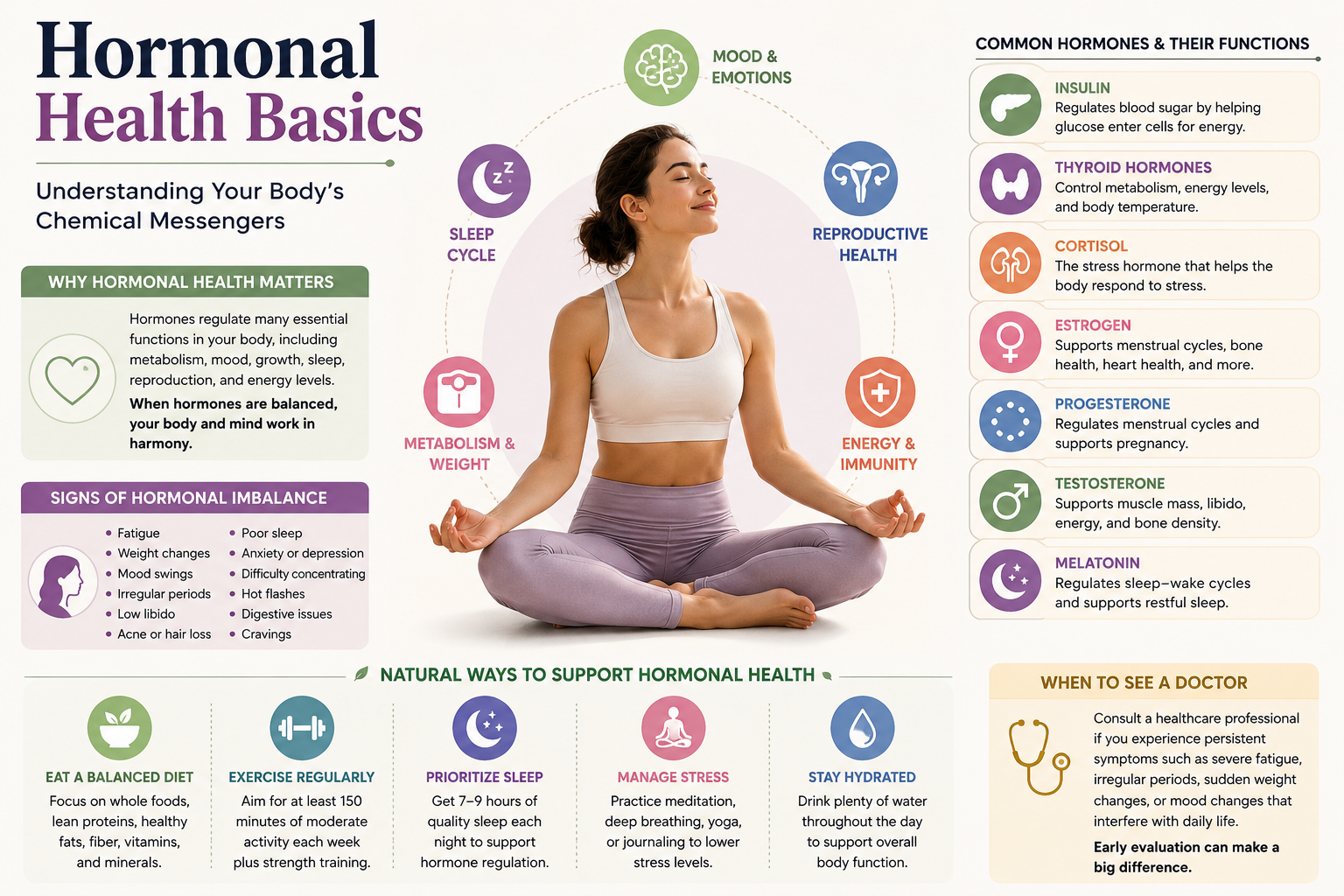
Hormonal Health Basics: Understanding Your Body’s Chemical Messengers
Hormones are often called the body’s chemical messengers because they regulate many essential functions, including metabolism, growth, mood, reproduction, sleep, and energy levels. When hormones are balanced, your body functions efficiently. However, even small hormonal changes can affect your physical and emotional well-being.
Understanding the basics of hormonal health can help you recognize early signs of imbalance and adopt healthy habits that support your body’s natural hormone regulation.
What Are Hormones?
Hormones are chemicals produced by endocrine glands. They travel through the bloodstream to organs and tissues, delivering instructions that control numerous body processes.
The major endocrine glands include:
- Pituitary gland
- Thyroid gland
- Adrenal glands
- Pancreas
- Ovaries (in women)
- Testes (in men)
- Pineal gland
Each gland produces specific hormones that work together to maintain balance, also known as homeostasis.
Why Hormonal Health Matters
Healthy hormone levels help regulate:
- Metabolism
- Body temperature
- Mood and emotions
- Growth and development
- Sleep cycles
- Appetite
- Blood sugar levels
- Reproductive health
- Bone strength
- Muscle growth
- Stress response
- Heart health
When hormone levels become too high or too low, they can affect multiple body systems.
Common Hormones and Their Functions
Insulin
Produced by the pancreas, insulin regulates blood sugar by helping glucose enter cells for energy.
An imbalance may contribute to:
- Type 2 diabetes
- Insulin resistance
- Weight gain
- Fatigue
Thyroid Hormones
The thyroid produces hormones that control metabolism and energy use.
Low thyroid hormone (hypothyroidism) may cause:
- Fatigue
- Weight gain
- Dry skin
- Feeling cold
- Constipation
High thyroid hormone (hyperthyroidism) may cause:
- Weight loss
- Rapid heartbeat
- Anxiety
- Sweating
- Tremors
Cortisol
Known as the “stress hormone,” cortisol helps the body respond to physical and emotional stress.
Healthy cortisol levels support:
- Blood pressure regulation
- Immune function
- Energy production
Chronic stress may disrupt normal cortisol patterns.
Estrogen
Estrogen is one of the primary female sex hormones.
It supports:
- Menstrual cycles
- Bone health
- Heart health
- Skin health
- Reproductive function
Estrogen levels naturally fluctuate during puberty, pregnancy, and menopause.
Progesterone
Progesterone prepares the uterus for pregnancy and helps regulate menstrual cycles.
It also plays a role in sleep and mood.
Testosterone
Although often associated with men, testosterone is important for both men and women.
It supports:
- Muscle strength
- Bone density
- Libido
- Energy levels
- Red blood cell production
Melatonin
Produced by the pineal gland, melatonin helps regulate the sleep-wake cycle.
Light exposure at night can reduce melatonin production.
Signs of Hormonal Imbalance
Symptoms vary depending on which hormones are affected but may include:
- Constant fatigue
- Unexplained weight changes
- Mood swings
- Anxiety or depression
- Poor sleep
- Hair loss
- Acne
- Irregular menstrual periods
- Low libido
- Difficulty concentrating
- Increased thirst
- Frequent urination
- Hot flashes
- Digestive changes
These symptoms can also have causes unrelated to hormones, so they should be evaluated by a healthcare professional if persistent.
Common Causes of Hormonal Imbalance
Several factors can affect hormone production, including:
Chronic Stress
Long-term stress can alter cortisol levels and indirectly influence other hormones.
Poor Diet
Highly processed foods, excessive sugar, and nutrient deficiencies may affect metabolic health and hormone regulation.
Lack of Sleep
Insufficient sleep can influence hormones involved in appetite, stress, and blood sugar regulation.
Physical Inactivity
Regular movement supports overall metabolic health and insulin sensitivity.
Aging
Hormone levels naturally change with age, including menopause in women and gradual testosterone decline in men.
Medical Conditions
Certain conditions can affect hormone production, including:
- Thyroid disorders
- Diabetes
- Polycystic ovary syndrome (PCOS)
- Pituitary disorders
- Adrenal disorders
Natural Ways to Support Hormonal Health
Eat a Balanced Diet
Choose foods rich in:
- Vegetables
- Fruits
- Whole grains
- Lean proteins
- Healthy fats
- Nuts and seeds
These foods provide nutrients that support overall health.
Maintain a Healthy Weight
Excess body fat can affect hormone production and insulin sensitivity.
Even modest weight loss can improve metabolic health for some people.
Exercise Regularly
Aim for at least 150 minutes of moderate physical activity each week.
Include:
- Walking
- Cycling
- Swimming
- Strength training
- Yoga
Prioritize Sleep
Adults generally need 7–9 hours of quality sleep each night.
Good sleep supports hormones involved in stress, appetite, and metabolism.
Manage Stress
Stress-management techniques include:
- Meditation
- Deep breathing
- Mindfulness
- Journaling
- Spending time outdoors
- Talking with supportive friends or family
Stay Hydrated
Proper hydration supports overall body function and metabolism.
Avoid Smoking
Smoking is associated with many health problems and may affect hormone balance and reproductive health.
Limit Alcohol
Heavy alcohol use can interfere with hormone production and sleep quality.
Foods That Support Overall Hormonal Health
Include foods such as:
- Leafy green vegetables
- Berries
- Fatty fish
- Eggs
- Greek yogurt
- Lentils
- Beans
- Oats
- Brown rice
- Avocados
- Walnuts
- Chia seeds
- Flaxseeds
- Olive oil
No single food “balances hormones,” but an overall healthy dietary pattern supports general health.
When Should You See a Doctor?
Consult a healthcare professional if you experience:
- Persistent fatigue
- Sudden weight changes
- Missed or irregular menstrual periods
- Severe acne
- Hair loss
- Difficulty becoming pregnant
- Ongoing mood changes
- Constant thirst
- Frequent urination
- Rapid heartbeat
- Neck swelling
- Symptoms that interfere with daily life
A clinician may recommend blood tests or other evaluations to determine whether a hormonal condition is present.
Frequently Asked Questions
Can hormones be balanced naturally?
Healthy habits such as eating a balanced diet, exercising, managing stress, and getting enough sleep can support normal hormone function. However, some hormonal disorders require medical treatment.
What is the biggest cause of hormonal imbalance?
There is no single cause. Aging, chronic stress, certain medical conditions, medications, sleep problems, and lifestyle factors can all contribute.
Does sugar affect hormones?
A diet high in added sugars may contribute to insulin resistance and metabolic changes over time. Limiting added sugars as part of an overall balanced diet supports good health.
Can exercise improve hormone health?
Regular physical activity supports insulin sensitivity, sleep quality, stress management, and overall metabolic health, all of which contribute to healthy hormone function.
Final Thoughts
Hormones influence nearly every system in the body, from metabolism and energy to mood and reproduction. While hormonal changes are a normal part of life, persistent symptoms such as fatigue, unexplained weight changes, or irregular menstrual cycles should not be ignored. Maintaining a balanced diet, staying active, getting enough sleep, managing stress, and seeking medical advice when needed are practical ways to support overall hormonal health and long-term well-being.