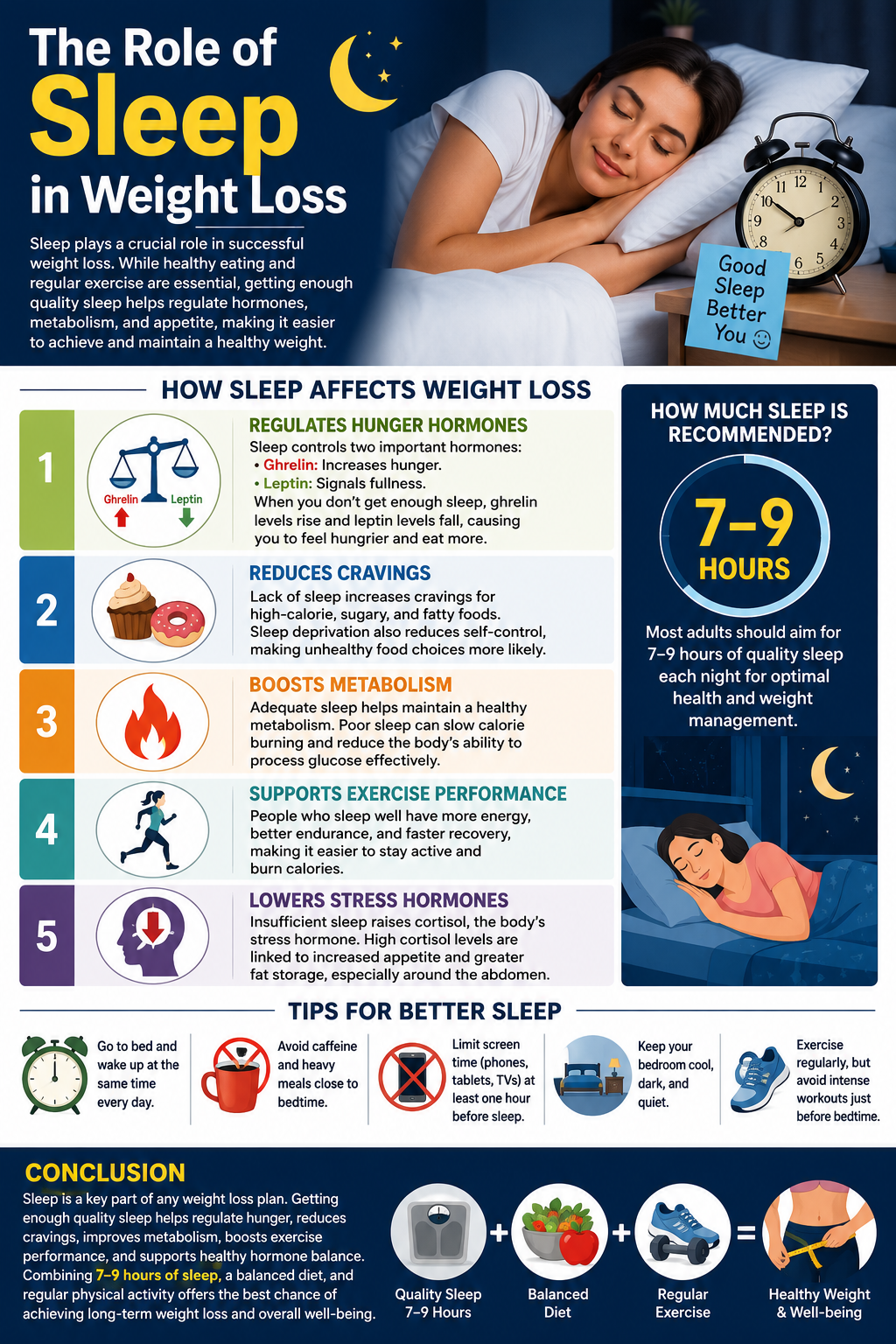
Sleep plays a crucial role in successful weight loss. While healthy eating and regular exercise are essential, getting enough quality sleep helps regulate hormones, metabolism, and appetite, making it easier to achieve and maintain a healthy weight.
How Sleep Affects Weight Loss
1. Regulates Hunger Hormones
Sleep controls two important hormones:
- Ghrelin: Increases hunger.
- Leptin: Signals fullness.
When you don’t get enough sleep, ghrelin levels rise and leptin levels fall, causing you to feel hungrier and eat more.
2. Reduces Cravings
Lack of sleep increases cravings for high-calorie, sugary, and fatty foods. Sleep deprivation also reduces self-control, making unhealthy food choices more likely.
3. Boosts Metabolism
Adequate sleep helps maintain a healthy metabolism. Poor sleep can slow calorie burning and reduce the body’s ability to process glucose effectively.
4. Supports Exercise Performance
People who sleep well have more energy, better endurance, and faster recovery, making it easier to stay active and burn calories.
5. Lowers Stress Hormones
Insufficient sleep raises cortisol, the body’s stress hormone. High cortisol levels are linked to increased appetite and greater fat storage, especially around the abdomen.
How Much Sleep Is Recommended?
Most adults should aim for 7–9 hours of quality sleep each night for optimal health and weight management.
Tips for Better Sleep
- Go to bed and wake up at the same time every day.
- Avoid caffeine and heavy meals close to bedtime.
- Limit screen time (phones, tablets, TVs) at least one hour before sleep.
- Keep your bedroom cool, dark, and quiet.
- Exercise regularly, but avoid intense workouts just before bedtime.
Conclusion
Sleep is a key part of any weight loss plan. Getting enough quality sleep helps regulate hunger, reduces cravings, improves metabolism, boosts exercise performance, and supports healthy hormone balance. Combining 7–9 hours of sleep, a balanced diet, and regular physical activity offers the best chance of achieving long-term weight loss and overall well-being.