How to Control Food Cravings Naturally
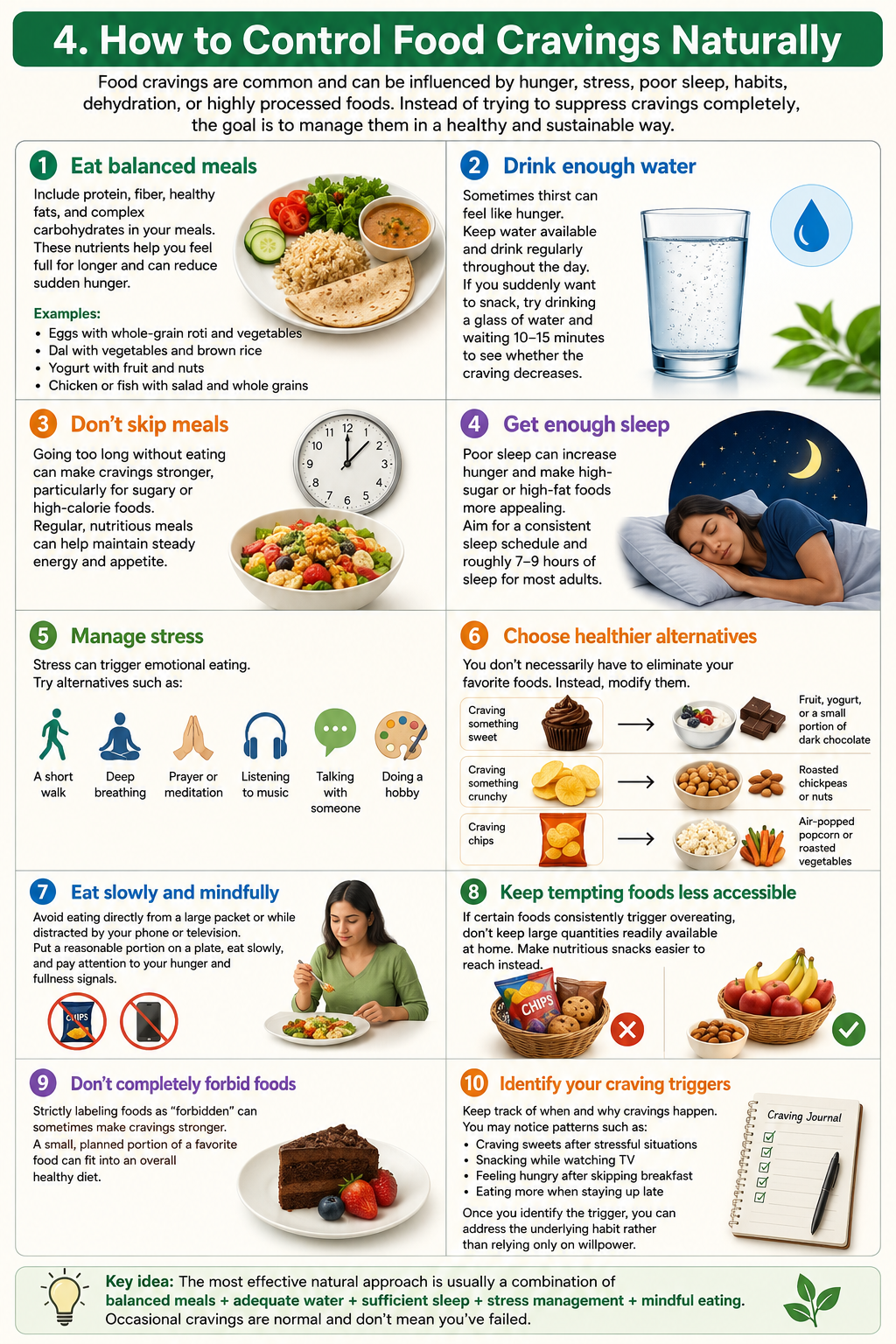
Food cravings are common and can be influenced by hunger, stress, poor sleep, habits, dehydration, or highly processed foods. Instead of trying to suppress cravings completely, the goal is to manage them in a healthy and sustainable way.
1. Eat balanced meals
Include protein, fiber, healthy fats, and complex carbohydrates in your meals. These nutrients help you feel full for longer and can reduce sudden hunger.
Examples:
- Eggs with whole-grain roti and vegetables
- Dal with vegetables and brown rice
- Yogurt with fruit and nuts
- Chicken or fish with salad and whole grains
2. Drink enough water
Sometimes thirst can feel like hunger. Keep water available and drink regularly throughout the day. If you suddenly want to snack, try drinking a glass of water and waiting 10–15 minutes to see whether the craving decreases.
3. Don’t skip meals
Going too long without eating can make cravings stronger, particularly for sugary or high-calorie foods. Regular, nutritious meals can help maintain steady energy and appetite.
4. Get enough sleep
Poor sleep can increase hunger and make high-sugar or high-fat foods more appealing. Aim for a consistent sleep schedule and roughly 7–9 hours of sleep for most adults.
5. Manage stress
Stress can trigger emotional eating. Try alternatives such as:
- A short walk
- Deep breathing
- Prayer or meditation
- Listening to music
- Talking with someone
- Doing a hobby
6. Choose healthier alternatives
You don’t necessarily have to eliminate your favorite foods. Instead, modify them.
For example:
- Craving something sweet → fruit, yogurt, or a small portion of dark chocolate
- Craving something crunchy → roasted chickpeas or nuts
- Craving chips → air-popped popcorn or roasted vegetables
7. Eat slowly and mindfully
Avoid eating directly from a large packet or while distracted by your phone or television. Put a reasonable portion on a plate, eat slowly, and pay attention to your hunger and fullness signals.
8. Keep tempting foods less accessible
If certain foods consistently trigger overeating, don’t keep large quantities readily available at home. Make nutritious snacks easier to reach instead.
9. Don’t completely forbid foods
Strictly labeling foods as “forbidden” can sometimes make cravings stronger. A small, planned portion of a favorite food can fit into an overall healthy diet.
10. Identify your craving triggers
Keep track of when and why cravings happen. You may notice patterns such as:
- Craving sweets after stressful situations
- Snacking while watching TV
- Feeling hungry after skipping breakfast
- Eating more when staying up late