Ghrelin: Understanding the Hunger Hormone
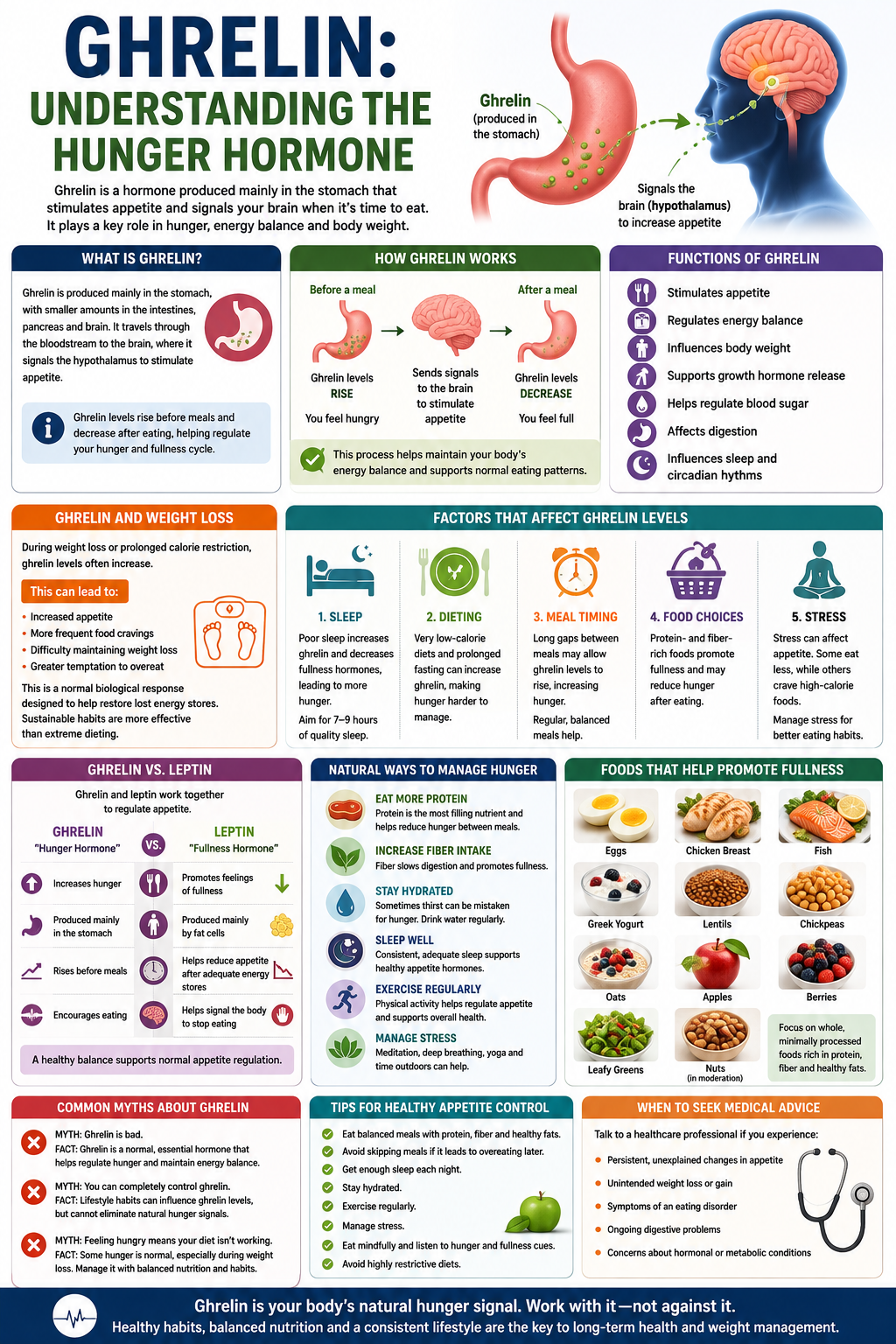
Ghrelin is often called the “hunger hormone” because it plays a major role in regulating appetite and signaling your brain when it’s time to eat. Produced primarily in the stomach, ghrelin helps control hunger, energy balance, and body weight. Understanding how ghrelin works can help you make healthier lifestyle choices that support weight management and overall well-being.
What Is Ghrelin?
Ghrelin is a hormone produced mainly by the stomach, with smaller amounts produced in the intestines, pancreas, and brain. It travels through the bloodstream to the brain, where it signals the hypothalamus to stimulate appetite.Ghrelin levels naturally rise before meals and decrease after eating, helping regulate your body’s hunger and fullness cycle.
How Ghrelin Works
When your stomach is empty, ghrelin levels increase, sending signals to your brain that it’s time to eat. After you consume a meal, ghrelin levels gradually decrease, reducing feelings of hunger.
This process helps maintain your body’s energy balance and supports normal eating patterns.
Functions of Ghrelin
Ghrelin has several important roles in the body, including:
- Stimulating appetite
- Regulating energy balance
- Influencing body weight
- Supporting growth hormone release
- Helping regulate blood sugar
- Affecting digestion
- Influencing sleep and circadian rhythms
Ghrelin and Weight Loss
Ghrelin can make weight loss challenging because its levels often increase after weight loss or prolonged calorie restriction.
This increase in hunger is part of the body’s natural response to help restore lost energy stores.
As a result, many people experience:
- Increased appetite
- More frequent food cravings
- Difficulty maintaining weight loss
- Greater temptation to overeat
Understanding this biological response can help explain why long-term weight management requires sustainable habits rather than extreme dieting.
Factors That Affect Ghrelin Levels
1. Sleep
Poor sleep can increase ghrelin levels while decreasing hormones associated with fullness. This combination may lead to increased hunger and higher calorie intake.
Aim for 7–9 hours of quality sleep each night.
2. Dieting
Very low-calorie diets and prolonged fasting can increase ghrelin production, making hunger more difficult to manage.
Moderate calorie deficits are generally easier to sustain than highly restrictive diets.
3. Meal Timing
Long gaps between meals may allow ghrelin levels to rise, increasing hunger for some people.
Regular, balanced meals may help maintain steadier appetite throughout the day.
4. Food Choices
Meals rich in protein and fiber tend to promote fullness and may help reduce hunger after eating.
Good choices include:
- Lean meats
- Eggs
- Greek yogurt
- Beans
- Lentils
- Whole grains
- Vegetables
- Fruits
5. Stress
Stress can affect appetite differently among individuals. Some people eat less, while others experience increased cravings, particularly for highly palatable foods.
Healthy stress-management techniques can support better eating habits.
Ghrelin vs. Leptin
Ghrelin and leptin work together to regulate appetite.
| Ghrelin | Leptin |
|---|---|
| Increases hunger | Promotes feelings of fullness |
| Produced mainly in the stomach | Produced mainly by fat cells |
| Rises before meals | Helps reduce appetite after adequate energy stores |
| Encourages eating | Helps signal the body to stop eating |
A healthy balance between these hormones supports normal appetite regulation.
Natural Ways to Manage Hunger
Eat More Protein
Protein is one of the most filling nutrients and may help reduce hunger between meals.
Increase Fiber Intake
Fiber slows digestion and promotes fullness.
High-fiber foods include:
- Oats
- Beans
- Fruits
- Vegetables
- Whole grains
- Seeds
Stay Hydrated
Sometimes thirst can be mistaken for hunger. Drinking water regularly supports overall health and may help with appetite management.
Sleep Well
Consistent, adequate sleep supports healthy regulation of appetite-related hormones.
Exercise Regularly
Regular physical activity supports overall health and may help regulate appetite over time.
Manage Stress
Activities such as meditation, deep breathing, yoga, and spending time outdoors may help reduce stress and support healthier eating patterns.
Foods That Help Promote Fullness
Consider including:
- Eggs
- Chicken breast
- Fish
- Greek yogurt
- Cottage cheese
- Lentils
- Chickpeas
- Oats
- Apples
- Berries
- Leafy greens
- Nuts (in moderation)
These foods are generally rich in protein, fiber, or both.
Common Myths About Ghrelin
Myth: Ghrelin is bad.
Fact: Ghrelin is a normal, essential hormone that helps regulate hunger and maintain energy balance.
Myth: You can completely control ghrelin.
Fact: Lifestyle habits can influence ghrelin levels, but they cannot eliminate the body’s natural hunger signals.
Myth: Feeling hungry means your diet isn’t working.
Fact: Some hunger is a normal biological response, especially during weight loss. The goal is to manage hunger with balanced nutrition and sustainable habits rather than ignore it completely.
Tips for Healthy Appetite Control
- Eat balanced meals with protein, fiber, and healthy fats.
- Avoid skipping meals if it leads to overeating later.
- Get enough sleep each night.
- Stay hydrated.
- Exercise regularly.
- Manage stress.
- Eat mindfully and pay attention to hunger and fullness cues.
- Avoid highly restrictive diets that are difficult to maintain.
When to Seek Medical Advice
Speak with a healthcare professional if you experience:
- Persistent, unexplained changes in appetite
- Unintended weight loss or weight gain
- Symptoms suggesting an eating disorder
- Ongoing digestive problems
- Concerns about hormonal or metabolic conditions
These symptoms may have causes beyond ghrelin and should be properly evaluated.
Final Thoughts
Ghrelin is an important hormone that helps regulate hunger, appetite, and energy balance. While it can make weight loss more challenging by increasing hunger—especially after calorie restriction—healthy habits such as eating protein-rich and fiber-rich foods, staying hydrated, exercising regularly, getting enough sleep, and managing stress can help support better appetite control. Rather than trying to eliminate hunger, focus on building sustainable habits that work with your body’s natural signals to support long-term health and weight management.