Lifestyle Habits That Reduce Belly Fat
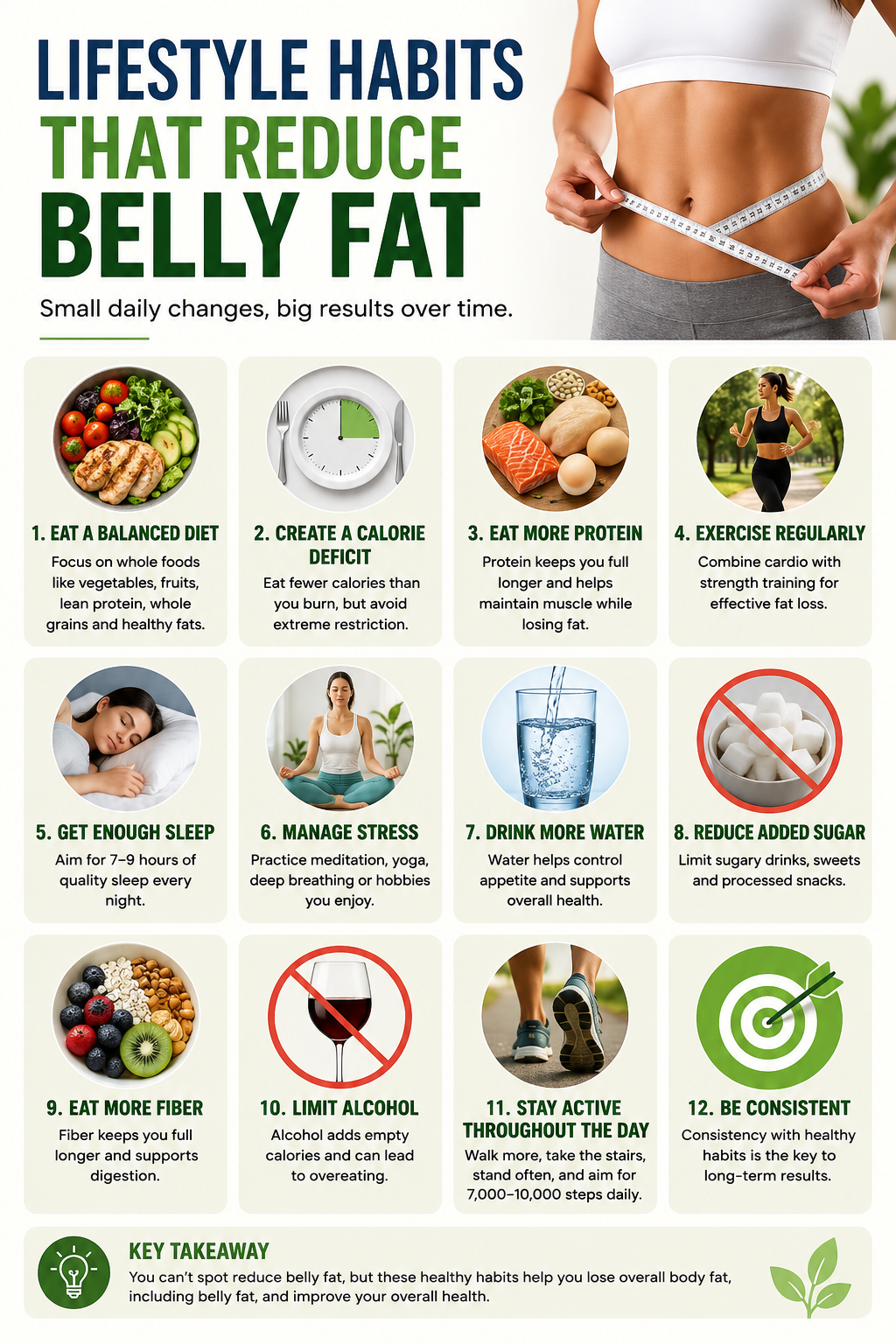
Reducing belly fat isn’t about finding a single “fat-burning” trick. The most effective approach is building healthy habits that help reduce overall body fat over time. Since you can’t specifically target belly fat through exercises or foods alone, these lifestyle habits can support sustainable fat loss and better health.
1. Eat a Balanced Diet
Focus on whole, minimally processed foods that provide lasting energy and nutrients.
- Eat plenty of vegetables and fruits.
- Include lean protein such as chicken, fish, eggs, beans, or tofu.
- Choose whole grains over refined grains.
- Include healthy fats from nuts, seeds, avocados, and olive oil.
- Limit sugary drinks, sweets, and highly processed snacks.
2. Create a Moderate Calorie Deficit
To lose body fat, you generally need to consume fewer calories than you burn. Aim for a modest calorie deficit rather than severe restriction, which is easier to maintain and helps preserve muscle mass.
3. Increase Protein Intake
Protein can help:
- Increase feelings of fullness.
- Support muscle maintenance during weight loss.
- Reduce cravings between meals.
Aim to include a source of protein with each meal.
4. Exercise Regularly
A combination of aerobic exercise and strength training is most effective.
Examples:
- Brisk walking
- Cycling
- Swimming
- Strength training 2–3 times per week
- Bodyweight exercises like squats, push-ups, and lunges
5. Get Enough Sleep
Poor sleep is linked to weight gain and may make it harder to manage appetite.
Aim for 7–9 hours of quality sleep each night by:
- Keeping a regular sleep schedule.
- Avoiding screens before bed.
- Creating a cool, dark sleeping environment.
6. Manage Stress
Chronic stress can influence eating habits and make healthy routines harder to maintain.
Try:
- Deep breathing exercises
- Meditation
- Yoga
- Walking outdoors
- Spending time with family and friends
7. Drink More Water
Water supports overall health and may help reduce overeating by promoting fullness.
Simple tips:
- Drink a glass of water before meals.
- Carry a reusable water bottle.
- Replace sugary beverages with water or unsweetened drinks.
8. Reduce Added Sugar
High intakes of added sugar, especially from sugary drinks, can make it easier to consume excess calories.
Instead, choose:
- Fresh fruit
- Plain yogurt with berries
- Unsweetened tea or coffee
- Sparkling water without added sugar
9. Eat More Fiber
Fiber helps you stay full longer and supports digestive health.
Good sources include:
- Oats
- Beans and lentils
- Apples
- Berries
- Broccoli
- Chia seeds
- Flaxseeds
10. Limit Alcohol
Alcohol can contribute extra calories and may make it easier to overeat. If you drink, doing so in moderation can support weight-management goals.
11. Stay Physically Active Throughout the Day
Daily movement matters in addition to planned workouts.
Ideas:
- Take the stairs.
- Walk during breaks.
- Stand up regularly if you work at a desk.
- Aim for 7,000–10,000 steps per day if appropriate for your fitness level.
12. Be Consistent
Healthy habits practiced consistently are more effective than short-term, restrictive diets. Sustainable changes are more likely to lead to long-term results.
Common Myths About Belly Fat
- Myth: Crunches burn belly fat.
- Fact: Crunches strengthen abdominal muscles but do not specifically burn belly fat.
- Myth: Fat-burning foods melt belly fat.
- Fact: No single food can target belly fat.
- Myth: Skipping meals speeds up weight loss.
- Fact: Skipping meals may increase hunger and make overeating more likely for some people.
Key Takeaways
- Eat a nutrient-rich, balanced diet.
- Maintain a moderate calorie deficit if your goal is weight loss.
- Exercise regularly with both cardio and strength training.
- Prioritize sleep and stress management.
- Drink water, eat more fiber and protein, and limit added sugar.
- Focus on long-term consistency rather than quick fixes.