High-Protein Diet: A Detailed Guide
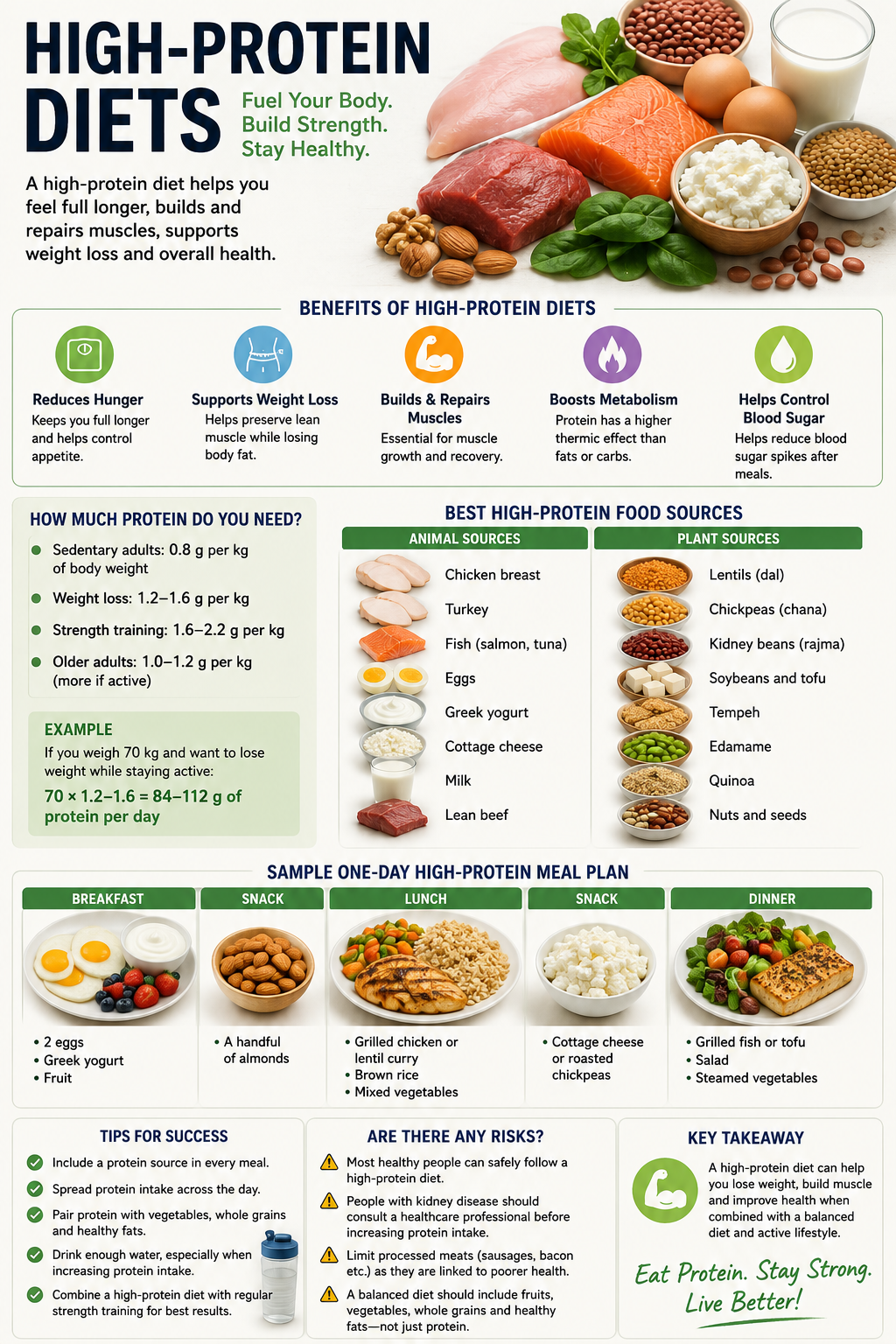
A high-protein diet is an eating pattern that increases protein intake to help with weight loss, muscle growth, and overall health. Protein helps you stay full longer, preserves muscle while losing fat, and requires more energy to digest than fats or carbohydrates.
Benefits
- Reduces hunger: Protein increases fullness, making it easier to eat fewer calories.
- Supports weight loss: Helps preserve lean muscle while losing body fat.
- Builds and repairs muscles: Essential if you exercise regularly.
- Boosts metabolism slightly: Your body uses more energy digesting protein than fats or carbs.
- Helps control blood sugar: Meals with protein can reduce sharp blood sugar spikes.
How Much Protein Do You Need?
General daily recommendations:
- Sedentary adults: 0.8 g per kg of body weight
- Weight loss: 1.2–1.6 g per kg
- Strength training: 1.6–2.2 g per kg
- Older adults: 1.0–1.2 g per kg, sometimes more if physically active
Example: If you weigh 70 kg, aiming for weight loss while staying active:
- 70 × 1.2–1.6 = 84–112 g of protein per day
Best High-Protein Foods
Animal Sources
- Chicken breast
- Turkey
- Fish (salmon, tuna)
- Eggs
- Greek yogurt
- Cottage cheese
- Milk
- Lean beef
Plant Sources
- Lentils (dal)
- Chickpeas (chana)
- Kidney beans (rajma)
- Soybeans and tofu
- Tempeh
- Edamame
- Quinoa
- Nuts and seeds
Sample One-Day Meal Plan
Breakfast
- 2 eggs
- Greek yogurt
- Fruit
Snack
- A handful of almonds
Lunch
- Grilled chicken or lentil curry
- Brown rice
- Mixed vegetables
Snack
- Cottage cheese or roasted chickpeas
Dinner
- Grilled fish or tofu
- Salad
- Steamed vegetables
Tips for Success
- Include a protein source in every meal.
- Spread protein intake across the day instead of eating most of it at one meal.
- Pair protein with vegetables, whole grains, and healthy fats.
- Drink enough water, especially if increasing protein intake.
- Combine a high-protein diet with regular strength training for the best results.
Are There Any Risks?
For most healthy people, a high-protein diet is safe. However:
- People with kidney disease should consult a healthcare professional before significantly increasing protein intake.
- Eating excessive amounts of processed meats (such as sausages and bacon) is not recommended because of their links to poorer health outcomes.
- A balanced diet should still include fruits, vegetables, whole grains, and healthy fats—not just protein.
A high-protein diet works best when it creates a sustainable calorie deficit for weight loss while providing enough nutrients to support overall health.