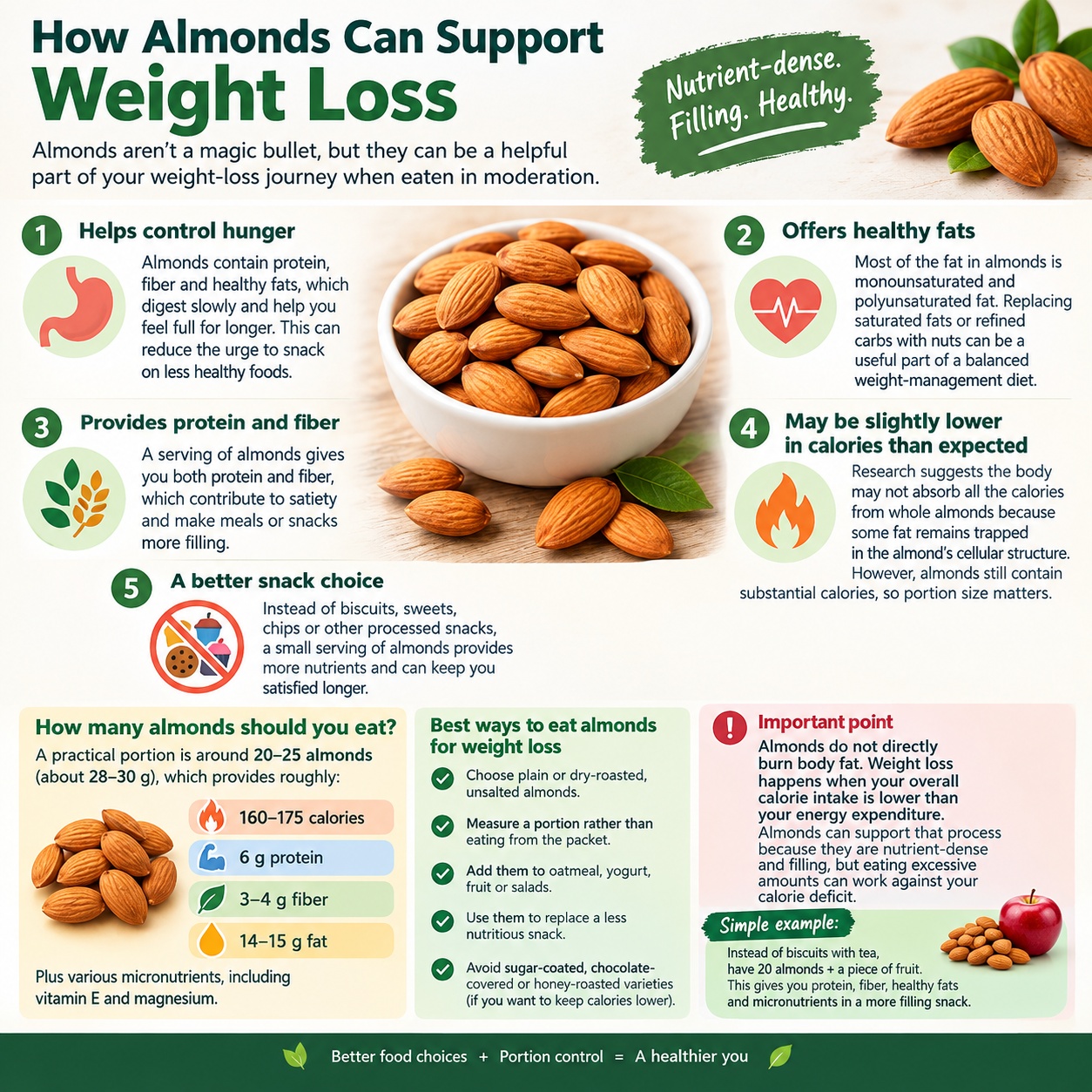
How Almonds Can Support Weight Loss
Almonds can be a useful food for weight loss when eaten in moderate portions. They are calorie-dense, but their combination of protein, fiber, healthy fats, and nutrients can help you feel satisfied and make it easier to control overall food intake.
1. They help control hunger
Almonds contain protein, fiber, and unsaturated fats, which digest relatively slowly and can help you stay full between meals. This may reduce the urge to snack on less nutritious foods.
2. They provide healthy fats
Most of the fat in almonds is monounsaturated and polyunsaturated fat. Replacing foods high in saturated fat or refined carbohydrates with nuts can be a useful part of a balanced weight-management diet.
3. They contain protein and fiber
A serving of almonds provides both protein and fiber. These nutrients can contribute to satiety and help make a meal or snack more filling.
4. Almond calories aren’t necessarily absorbed completely
Research suggests that the body’s metabolizable energy from whole almonds can be lower than the amount predicted from their nutrition label because some of the fat remains trapped within the almond’s cellular structure. However, almonds still contain substantial calories, so portion size matters.
5. They can be a better snack choice
Instead of biscuits, sweets, chips, or other highly processed snacks, a small serving of almonds can provide more nutrients and potentially keep you satisfied longer.
How many almonds should you eat?
A practical portion is around 20–25 almonds (about 28–30 g), which provides roughly:
- 160–175 calories
- 6 g protein
- 3–4 g fiber
- 14–15 g fat
- Various micronutrients, including vitamin E and magnesium
For weight loss, eating a large handful several times a day can easily add hundreds of calories. Portion control is more important than simply adding almonds to your existing diet.
Best ways to eat almonds for weight loss
- Choose plain or dry-roasted, unsalted almonds.
- Measure a portion rather than eating directly from the packet.
- Add them to oatmeal, yogurt, fruit, or salads.
- Use them to replace a less nutritious snack rather than eating them in addition to your normal snacks.
- Avoid heavily sugar-coated, chocolate-covered, or honey-roasted varieties if you’re trying to keep calories lower.
Important point
Almonds do not directly burn body fat. Weight loss primarily occurs when your overall calorie intake is lower than your energy expenditure. Almonds can support that process because they are nutrient-dense and filling, but eating excessive amounts can work against your calorie deficit.
Simple example: Instead of having biscuits with tea, you could have 20 almonds + a piece of fruit. This gives you protein, fiber, healthy fats, and micronutrients in a more filling snack.
One response to “How Almonds Can Support Weight Loss”
Great Information